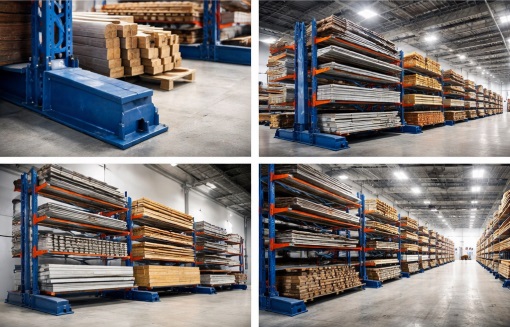
Cantilever racks are one of the most effective storage solutions for long, bulky, and irregularly shaped materials such as pipes, steel bars, timber, aluminum profiles, and panels. Unlike traditional pallet racking, cantilever systems utilize horizontal arms that extend from vertical columns to support loads without obstructing access from the front.
Understanding cantilever rack specifications and load capacity is essential for safe operation, optimal space utilization, and long-term durability. Choosing the right configuration helps prevent overloading, improves warehouse efficiency, and ensures compliance with safety standards.
This guide explains the key technical specifications, load capacity factors, and how to select the right cantilever rack system for your storage needs.
Key Cantilever Rack Specifications
Cantilever rack systems are made up of several structural components. Each part plays a critical role in load performance and stability.
Upright (Column) Specifications
The upright is the vertical column that supports the entire rack structure.
-
Height: Common heights range from 3 to 12 meters, depending on warehouse clearance and storage needs.
-
Material Thickness: Thicker steel uprights provide higher load resistance and better structural stability.
-
Single-Sided vs Double-Sided:
-
Single-sided racks are installed against walls.
-
Double-sided racks allow storage on both sides for higher capacity.
-
The upright design directly affects how much weight the rack can safely support.
Cantilever Arm Specifications
The arms extend from the upright and hold the stored materials.
-
Arm Length: Typically between 600 mm and 1800 mm. Longer arms allow deeper storage but reduce load capacity.
-
Arm Spacing: Adjustable spacing allows storage of different material sizes.
-
Arm Types:
-
Straight arms for flat or uniform loads
-
Inclined arms to prevent rolling materials
-
Arm selection must match the weight, size, and shape of the stored goods.
Base & Bracing Structure
The base connects the uprights to the floor and provides stability.
-
Base Length: Longer bases improve load distribution and prevent tipping.
-
Floor Anchoring: Anchored bases increase safety, especially for tall racks.
-
Bracing: Cross and diagonal bracing improve resistance to lateral forces.
A strong base system ensures the rack remains stable even under heavy loads.
Cantilever Rack Load Capacity
Load capacity refers to how much weight the rack can safely support without risk of deformation or collapse.
Load per Arm
Each arm has a specific weight limit.
-
Light-duty arms: 200–500 kg
-
Medium-duty arms: 500–1000 kg
-
Heavy-duty arms: 1000 kg+
Longer arms and wider spacing reduce load capacity. Shorter, reinforced arms can handle heavier loads.
Load per Level
A “level” refers to one row of arms across the rack.
-
Weight should be evenly distributed
-
Overloading one side can cause a structural imbalance
-
Manufacturers usually specify the maximum load per level
Proper load distribution improves safety and extends rack lifespan.
Total Rack Capacity
The total rack capacity depends on:
-
Upright strength
-
Base design
-
Floor load rating
-
Number of arms and levels
Warehouse floors must be able to support the combined weight of the rack and stored materials.
Factors That Affect Load Capacity
Several real-world factors influence how much weight a cantilever rack can safely hold.
Material Type
Heavier materials like steel bars and solid timber require higher load ratings than lightweight aluminum or plastic products.
Load Distribution
Evenly spread loads reduce stress on individual arms and uprights. Point loads increase the risk of deformation.
Rack Configuration
Double-sided racks and taller systems require stronger bases and thicker uprights to maintain stability.
Environmental Conditions
High humidity, temperature changes, and corrosive environments can weaken steel over time if proper coatings are not used.
How to Choose the Right Specifications
Selecting the correct cantilever rack system depends on your warehouse needs.
Warehouse Space
-
Ceiling height
-
Aisle width
-
Forklift clearance
Material Dimensions
-
Length
-
Weight
-
Shape
Handling Method
-
Manual handling
-
Forklift
-
Crane systems
Future Expansion
Modular cantilever systems allow you to add arms or uprights as storage needs grow.
Choosing the right specifications improves safety, efficiency, and long-term cost savings.
Safety & Compliance Standards
Cantilever racks must meet industrial safety standards to prevent accidents.
Load Signage
Clear load capacity signs should be displayed on every rack.
Regular Inspections
-
Check for bent arms
-
Look for loose anchors
-
Inspect welds and bolts
Training
Warehouse staff should be trained on proper loading techniques and weight limits.
Following safety guidelines reduces the risk of collapse and workplace injuries.
Common Applications of Cantilever Racks
Cantilever racks are widely used in:
-
Construction material warehouses
-
Steel and metal processing plants
-
Timber and lumber storage
-
Furniture and panel storage
-
Plumbing and pipe suppliers
Their open-front design makes them ideal for long, heavy, and irregular products.
Conclusion
Cantilever rack specifications and load capacity play a critical role in warehouse safety and performance. By choosing the right upright height, arm length, base design, and load rating, businesses can maximize storage efficiency while maintaining a safe working environment.
A properly designed cantilever racking system protects your inventory, improves workflow, and ensures long-term reliability for industrial storage operations.