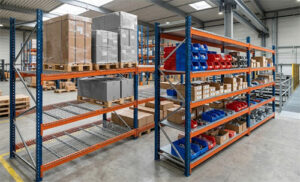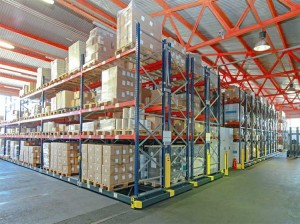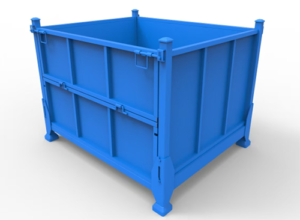
This guide explains how mobile pallet racking system cost is actually formed in real warehouse projects — based on engineering structure, site conditions, safety compliance, and operational requirements.
Instead of giving you a single price, this article shows where your budget really goes and how to control cost without sacrificing long-term safety and performance.
1. What Is a Mobile Pallet Racking System (Context for Cost Evaluation)
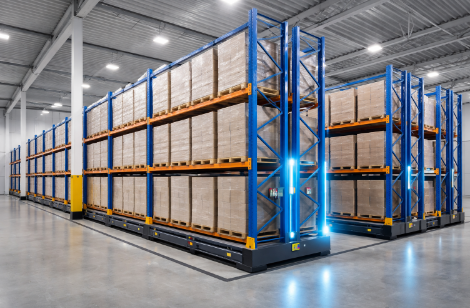
A mobile pallet racking system places standard pallet racks on motorized mobile bases that move along floor rails.
Only one working aisle opens at a time, allowing multiple rack rows to be stored in a much smaller footprint.
Compared with conventional fixed racking, a mobile system includes:
- Powered drive units
- Rail guidance systems
- Electrical and control components
- Safety protection devices
2. Real Project Cost Structure (How Your Budget Is Actually Spent)
Racking structure
Includes upright frames, beams, bracing and accessories. Cost depends on load and height requirements.
Mobile bases and drive system
Motors, gearboxes, wheels and control modules form one of the largest cost components.
Rail system and floor preparation
Cost depends heavily on concrete flatness, cutting, grouting and leveling requirements.
3. Key Factors That Truly Drive Cost
Warehouse layout and geometry
Simple straight layouts reduce cost. Complex layouts increase rail and control system expenses.
Load rating and pallet weight
Higher loads require stronger structures and more powerful drive systems.
Rack height and design class
Taller systems require stricter engineering and higher safety margins.
4. Electrical and control system
This includes control cabinets, operator panels, sensors, and safety logic systems.
If WMS integration is required, additional programming and wiring will increase cost.
5. Safety and protection equipment
Safety systems are mandatory in professional mobile racking projects.
Typical devices include:
- Photoelectric safety scanners
- Emergency stop systems
- Obstacle detection sensors
- Aisle presence protection
6. Installation and commissioning
Installation includes mechanical assembly, rail alignment, wiring, testing and final handover.
Site conditions strongly affect installation cost.
7. Hidden and often overlooked costs
- Floor flatness correction
- Concrete cutting and re-grouting
- Power supply upgrades
- Control room preparation
- Delays due to unfinished site conditions
8. Buyer mistakes that increase total cost
Underestimating future capacity
Leads to early system modification or replacement.
Ignoring access planning
Poor layout increases system complexity and cost.
Choosing low-spec components
Reduces initial cost but increases long-term ownership cost.
9. How to evaluate a supplier quotation
- Detailed layout drawings
- Rack load capacity tables
- Drive system specifications
- Rail fixing method
- Safety system description
10. When mobile racking is the right investment
- Building expansion is not possible
- High land or rental cost
- Need for high storage density
- Controlled throughput operations
11. Checklist before final quotation
- Pallet size and weight
- Storage capacity target
- Rack height requirement
- Temperature and humidity
- Future expansion plan
12. Summary: controlling mobile racking system cost
Mobile pallet racking system cost is driven by engineering design, structural capacity, site conditions, and compliance requirements.
The best way to control cost is not reducing safety or specifications, but optimizing layout, preparing site conditions, and selecting the correct system design.
A well-designed system is a long-term infrastructure investment rather than a simple storage product.