Industrial shelving plays a vital role in organizing, storing, and managing goods in warehouses, factories, and commercial storage areas. Choosing the right shelving system improves space utilization, enhances workflow efficiency, and ensures workplace safety.
This guide explains the different types of industrial shelving, their features, and how to select the best solution for your storage needs.
What Is Industrial Shelving?
Industrial shelving refers to heavy-duty storage systems designed for storing tools, parts, cartons, and other non-palletized goods. Unlike warehouse racking systems, which are typically used with forklifts and pallets, industrial shelving is mainly used for manual picking and medium-load storage.
These shelving systems are usually made from steel and offer adjustable shelf levels, making them suitable for various storage requirements in industrial environments.
Why There Are Different Types of Industrial Shelving
Not all storage needs are the same. Different businesses require shelving systems that match their:
-
Load capacity requirements
-
Product size and weight
-
Available floor space
-
Access frequency
-
Environmental conditions
Because of these variations, industrial shelving is available in multiple designs to meet specific operational needs.
Main Types of Industrial Shelving
Longspan Shelving
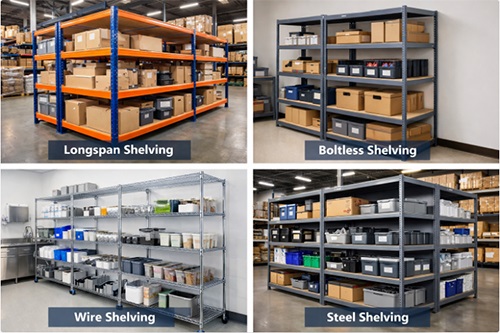
Longspan shelving is designed for medium to heavy loads and is widely used in warehouses and industrial storerooms. It features long shelf beams and adjustable levels, allowing users to store bulky items, cartons, and spare parts efficiently.
This type of shelving offers excellent flexibility and can be customized for different load capacities and shelf depths.
Boltless Shelving
Boltless shelving, also known as rivetless shelving, is popular for its quick and easy assembly. It does not require bolts or special tools, making it ideal for businesses that need fast installation or frequent reconfiguration.
Boltless shelving is suitable for light to medium-duty storage and is commonly used in stockrooms, workshops, and distribution centers.
Rivet Shelving
Rivet shelving is a strong and stable shelving solution designed for industrial use. It uses riveted connections to provide excellent structural strength while allowing easy adjustment of shelf heights.
This type of shelving is cost-effective and works well for storing tools, boxes, and inventory items that require reliable support.
Steel Shelving
Steel shelving offers high durability and load-bearing capacity. With a powder-coated finish, it resists corrosion and wear, making it suitable for demanding industrial environments.
Steel shelving is commonly used in manufacturing facilities, logistics centers, and warehouses where strength and long-term reliability are essential.
Wire Shelving
Wire shelving features an open design that allows airflow and visibility. This makes it ideal for environments that require cleanliness, ventilation, and hygiene, such as food storage, medical facilities, and cold storage rooms.
Many wire shelving systems come with corrosion-resistant coatings, making them suitable for humid or temperature-controlled environments.
Mobile Shelving Systems
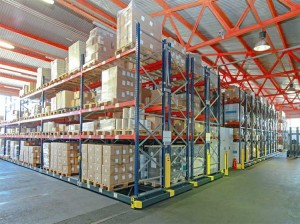
Mobile shelving systems are designed to maximize storage density by reducing the number of fixed aisles. Shelving units are mounted on mobile bases that move along floor tracks, allowing users to open an aisle only when needed.
This solution is ideal for warehouses, archives, and storage rooms where space efficiency is a priority.
How to Choose the Right Industrial Shelving
When selecting an industrial shelving system, consider the following factors:
-
Load capacity: Ensure the shelves can support the weight of your products.
-
Shelf size and adjustability: Choose a system that fits your storage items.
-
Warehouse layout: Consider aisle width and available space.
-
Environmental conditions: Humidity, temperature, and cleanliness requirements matter.
-
Budget and scalability: Select a system that can grow with your business.
The right shelving solution improves efficiency, safety, and long-term storage performance.
Safety Standards and Best Practices
To maintain a safe storage environment:
-
Follow manufacturer load ratings
-
Distribute weight evenly
-
Secure shelving to the floor or wall if required
-
Conduct regular inspections
-
Train staff on proper loading practices
Proper installation and maintenance reduce the risk of accidents and extend the lifespan of the shelving system.
Common Applications of Industrial Shelving
Industrial shelving is widely used in:
-
Warehouses
-
Manufacturing plants
-
Distribution centers
-
Retail stockrooms
-
Spare parts storage areas
Its flexibility and durability make it suitable for many industrial and commercial environments.
FAQs About Industrial Shelving
What is the strongest type of industrial shelving?
Steel shelving and longspan shelving are typically the strongest options for heavy-duty storage.
Can industrial shelving be customized?
Yes. Most systems offer adjustable shelf heights, different load capacities, and various accessories.
How long does industrial shelving last?
With proper use and maintenance, industrial shelving can last for many years.
Is mobile shelving safe for industrial use?
Yes, when installed correctly and used according to safety guidelines.
Conclusion
Industrial shelving is an essential storage solution for modern warehouses and industrial facilities. With options like longspan, boltless, rivet, steel, wire, and mobile shelving, businesses can choose a system that matches their storage needs, space limitations, and operational goals.
Selecting the right industrial shelving improves organization, enhances productivity, and ensures a safer working environment.