The term gondola often brings to mind the long, narrow boats seen in the canals of Venice. However, in retail and supermarket environments, the same word is used to describe one of the most common shelving systems in the world.
So why are shelves called gondolas? The answer lies in a combination of historical language, visual similarity, and the evolution of modern retail design. Understanding the origin of the term helps retailers, designers, and buyers communicate more clearly when planning store layouts.
Why the Term “Gondola” Causes Confusion
For many people outside the retail industry, the word gondola has only one meaning: a boat. This naturally leads to confusion when the term appears in store design discussions or product specifications.
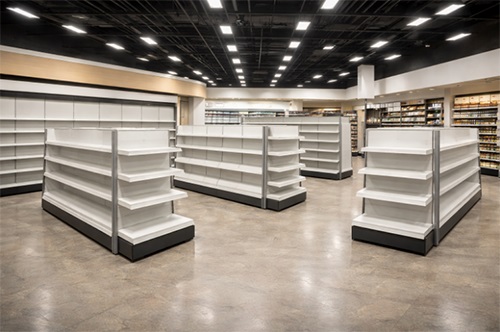
In retail, however, gondola refers to a freestanding, modular shelving system used to display merchandise in aisles and along walls. The shared name is not accidental, and it reflects both form and function.
What Is a Gondola in Retail?
In a retail context, a gondola is a self-supporting shelving unit designed for product display and easy customer access. Gondola shelving typically includes uprights, back panels, adjustable shelves, and a wide range of accessories.
Unlike fixed wall shelving, gondolas can be placed almost anywhere in a store. This flexibility makes them the backbone of most supermarket and retail layouts, allowing for efficient use of floor space and smooth customer traffic flow.
The Origin of the Term “Gondola”
The word gondola originates from Italy and historically referred to a long, narrow, flat-bottomed boat designed to move smoothly through narrow waterways. Over time, the term began to describe objects that shared similar characteristics—elongated shape, balance, and the ability to carry weight evenly.
As retail environments evolved, designers often borrowed familiar words to describe new fixtures. The term gondola gradually found its way into retail vocabulary to describe shelving units with a long, balanced, and self-supporting structure.
Why Retail Shelves Are Called Gondolas
Retail shelves are called gondolas because of their structural and visual similarities to the original gondola concept. Gondola shelving units are typically long, stable, and capable of carrying merchandise on both sides—much like a gondola boat carries passengers while remaining balanced in water.
Early retail fixtures adopted the term to emphasize the idea of a central, freestanding structure that could support weight evenly and remain stable without wall support. Over time, the name became standardized across the retail and store fixture industry.
When Gondola Shelving Became Popular in Retail
Gondola shelving rose to prominence with the growth of self-service supermarkets in the mid-20th century. As stores shifted away from counter service, retailers needed shelving systems that allowed customers to browse freely and access products directly.
Freestanding gondolas made it possible to create organized aisles, improve product visibility, and guide customer movement. Their modular design also allowed stores to reconfigure layouts easily, which led to widespread adoption across the retail sector.
Key Characteristics That Define Gondola Shelves
Several defining features separate gondola shelving from other display systems:
-
Freestanding design that does not require wall mounting
-
Modular construction for easy expansion or reconfiguration
-
Adjustable shelves to accommodate different product sizes
-
Accessory compatibility, including hooks, baskets, and signage
These characteristics explain why gondola shelving remains a long-term solution for both small shops and large retail chains.
Gondola Shelving vs Other Types of Shelving
Compared to wall-mounted shelves, gondola shelving offers far greater flexibility. Wall shelves are fixed in position, while gondolas can be moved or rearranged as product lines change.
Unlike simple display racks, gondola systems are designed for both storage and merchandising, supporting heavier loads while maintaining a clean and organized appearance. This combination of strength and adaptability makes gondola shelving the preferred choice in most retail environments.
Common Types of Gondola Shelving
Although the term gondola has a single origin, it covers several practical shelving configurations used in modern stores.
Single-sided gondola shelving, often installed along walls, is ideal for perimeter displays and space-efficient layouts.
Double-sided gondola shelving, commonly placed in the center of stores, forms aisles and maximizes product exposure on both sides.
End cap gondola displays, located at the ends of aisles, are used for promotions, seasonal products, and impulse purchases.
Together, these gondola types create a complete and effective retail shelving system.
Why Understanding the Term Matters for Retail Planning
Knowing why shelves are called gondolas is more than just a language detail. It helps retailers avoid misunderstandings when sourcing shelving, communicating with suppliers, or reviewing layout plans.
A clear understanding of gondola terminology also makes it easier to select the right shelving configuration for specific store needs, ensuring efficient space usage and long-term flexibility.
Conclusion: The Meaning Behind the Name “Gondola Shelving”
Shelves are called gondolas because the term reflects their balanced, freestanding, and load-bearing design, inspired by the original meaning of the word. Over time, the name became a standard part of retail vocabulary as gondola shelving proved to be the most practical solution for modern stores.
Today, gondola shelving continues to define retail layouts around the world, combining function, flexibility, and a name rooted in both history and design.