In factories and warehouses, moving and storing materials is part of everyday work. From raw materials and spare parts to finished products, each item needs a suitable storage location and an efficient way to move through the facility.
Wire containers and logistics trolleys are two commonly used types of material handling equipment. Although both help improve material organization and movement, they serve different purposes and require different considerations when purchasing.
As a manufacturer of industrial storage and material handling equipment, Aceally supplies wire containers, logistics trolleys, warehouse racking, and related metal products for factories, warehouses, and distribution centers.
This guide explains the key features of wire containers and logistics trolleys, what to check before ordering, and when a customized design may be worth considering.
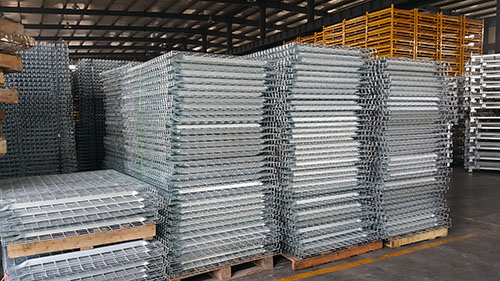
1. Wire Containers: Practical Storage and Handling
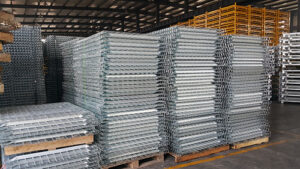
Wire containers are widely used to store, sort, and transport spare parts, metal components, tools, and finished products.
Their open mesh structure makes it easier to identify stored items and check inventory without opening every container. Depending on the design, they can also be stacked or folded to improve space utilization.
However, not all wire containers are suitable for the same loads or operating conditions.
Wire Diameter, Mesh Size, and Frame Construction
Wire diameter and mesh size are important, but they should not be evaluated separately from the overall structure.
Steel grade, welding quality, frame reinforcement, and bottom construction all influence a container’s strength and performance.
For small components, a smaller mesh opening may help prevent items from falling through. Heavier materials may require a reinforced frame and base, depending on their weight and how the load is distributed.
Rather than choosing a container based on wire thickness alone, buyers should confirm the manufacturer’s rated capacity for the complete structure.
Load Capacity and Bottom Structure
The container’s rated load should match the maximum weight of the goods it will hold.
Load distribution is equally important. Heavy components concentrated in one area can create different stresses from goods distributed evenly across the base.
A reinforced bottom and suitable support structure help the container accommodate its intended load.
Before ordering, confirm the rated load capacity, internal dimensions, and any restrictions on concentrated or uneven loading.
Stackable and Foldable Designs
Stackable wire containers allow businesses to use vertical storage space when the container design and operating conditions permit.
For stackable models, buyers should confirm both the rated load per container and the manufacturer’s permitted stacking configuration. Safe stacking depends on the condition of the containers, load distribution, stacking supports, and floor conditions.
Foldable wire containers offer another advantage. When empty, suitable models can be collapsed to reduce the space needed for storage or return transportation.
If frequent folding is expected, pay attention to the hinges, locking mechanisms, and ease of operation.
Important:
A wire container’s rated load capacity and permitted stacking configuration are not interchangeable. Both should be confirmed before using loaded containers in stacked storage.
Forklift Handling and Surface Finish
Some wire containers include forklift entry points or bases designed for mechanical handling. Their dimensions and lifting arrangement should be compatible with the equipment used in the facility.
Surface treatment is another consideration.
Galvanized and powder-coated finishes are available for different applications. The appropriate finish depends on the operating environment, corrosion exposure, appearance requirements, and maintenance conditions.
For outdoor or particularly corrosive environments, the surface treatment should be specified according to the actual exposure conditions rather than assuming a standard finish will be sufficient.
2. Logistics Trolleys: Moving Materials Around the Factory
While wire containers focus on storage and handling, logistics trolleys are designed primarily to move materials between work areas.
They are commonly used between production lines, storage areas, assembly stations, packing departments, and dispatch zones.
A suitable trolley can reduce repeated manual carrying and help workers move goods in a more organized way.
For applications requiring enclosed or partially enclosed mobile storage, Aceally also offers roll containers and rolling cages. These are related handling products, although their structures and applications differ from open-platform logistics trolleys.
Load Capacity and Platform Design
Start with the maximum weight and dimensions of the goods being transported.
The trolley’s rated capacity must account for the frame, platform, connections, and caster assemblies. A strong steel frame alone does not guarantee that the complete trolley can safely carry the intended load.
For heavy materials, reinforced platforms and suitable support structures may be required.
For smaller components, multi-tier trolleys can provide separate storage levels and make sorting easier during internal transportation.
Wheel Material, Size, and Load Rating
Casters have a direct effect on trolley movement, handling effort, and floor compatibility.
Rubber wheels are often selected where quieter operation and floor protection are important. Polyurethane and nylon wheels may be suitable for other industrial applications, depending on the load, floor conditions, and operating environment.
Wheel diameter also matters. Larger wheels generally roll more easily over minor floor irregularities, while smaller wheels may be appropriate for smooth floors and compact trolley designs.
Buyers should confirm the rated capacity of the complete caster assembly, including its mounting arrangement, under the intended operating conditions.
Frequent movement, floor joints, and impact loads should also be considered when selecting wheels.
Brakes and Maneuverability
Swivel casters allow a trolley to change direction more easily in confined spaces. Fixed casters can improve straight-line tracking.
A combination of swivel and fixed casters may be suitable for some factory layouts, while other applications require different arrangements.
Brakes help keep a trolley stationary during loading, unloading, or temporary parking. However, a braking system should not be assumed to make a loaded trolley safe on every slope.
The intended floor gradient, load, and operating conditions should be checked against the manufacturer’s instructions.
Shelves and Handle Design
Single-platform trolleys are suitable for many larger or bulkier goods. Multi-tier designs can help separate smaller parts, tools, or production batches.
Handle position and height also affect daily usability, especially when workers move trolleys repeatedly throughout a shift.
For customized trolleys, buyers should consider the loading height, required access to each shelf, turning space, and whether the trolley needs to pass through doorways or narrow production aisles.
3. When Does Product Customization Make Sense?
Standard wire containers and logistics trolleys are suitable for many general industrial applications. However, factories often have specific requirements that standard models cannot fully accommodate.
Wire Container Customization
- External and internal dimensions
- Wire diameter and mesh opening
- Rated load capacity and bottom reinforcement
- Stackable or foldable structures
- Forklift handling arrangements
- Surface treatment and finish
Logistics Trolley Customization
- Platform dimensions and frame construction
- Number and spacing of shelves
- Wheel material, diameter, and caster configuration
- Handle height and position
- Braking arrangements
- Required load capacity
For example, a factory transporting components between machining and assembly areas may need a trolley with dedicated compartments to separate different parts.
A warehouse using returnable containers may place greater importance on folding efficiency, stackability, and transport dimensions.
The goal of customization is not simply to change product dimensions. It is to match the equipment to the materials being handled and the way the facility operates.
Before requesting a quotation, prepare product drawings or reference photos, load requirements, expected quantities, and information about the working environment.
These details help the manufacturer evaluate the proposed configuration and reduce unnecessary design revisions.
4. What Should You Look for in a Material Handling Equipment Manufacturer?
When comparing suppliers, purchase price is only one consideration.
Two products with similar external dimensions may differ in their structural design, material specifications, welding quality, surface treatment, and rated capacity.
A suitable manufacturer should be able to review the intended application and provide clear technical information before production.
Supplier Evaluation Checklist
- Product dimensions and manufacturing drawings
- Rated load capacity and applicable operating restrictions
- Material specifications and structural details
- Welding and surface finish requirements
- Stacking, folding, or caster specifications where applicable
- Packaging arrangements and shipping dimensions
- Inspection requirements and order quantities
For customized projects, technical confirmation is particularly important. Drawings, load requirements, structural details, and handling methods should be reviewed before the manufacturing specifications are finalized.
Transport efficiency is another factor worth discussing.
For example, foldable wire containers may reduce empty return-shipment volume, while suitable stacking and packaging arrangements can help improve container loading efficiency.
The actual benefit depends on the product dimensions, packaging method, and shipping configuration.
5. Aceally: Industrial Storage and Material Handling Equipment Manufacturer
Founded in 1997, Aceally has nearly 30 years of experience in warehouse storage and material handling solutions.
According to the company’s published profile, Aceally operates four manufacturing facilities covering approximately 150,000 square meters, with more than 600 employees across the group.
Our product range includes wire containers, logistics trolleys, wire mesh products, warehouse racking, and other metal storage equipment.
For customized projects, we focus on understanding the customer’s application, including product dimensions, load requirements, structural design, surface treatment, and handling methods.
Whether a customer needs wire containers for warehouse storage or logistics trolleys for internal factory transportation, selecting the right configuration begins with clear operating requirements.
Learn more about our manufacturing background and product range on the About Aceally page.
Conclusion: Choosing Equipment That Fits Your Workflow
Wire containers and logistics trolleys serve different purposes, but both play an important role in factory and warehouse operations.
Wire containers help organize and store materials, while logistics trolleys support movement between production and storage areas.
When selecting either product, buyers should consider more than dimensions and purchase price. Load capacity, structural design, handling methods, operating conditions, and maintenance requirements all influence long-term suitability.
For businesses with specific handling requirements, a customized configuration may provide a better fit than a standard model.
Looking for Wire Containers or Logistics Trolleys?
Aceally supplies industrial wire containers, logistics trolleys, and related material handling equipment for factories, warehouses, and distribution centers.
Share your product drawings, required dimensions, load capacities, order quantities, and application details with our team.