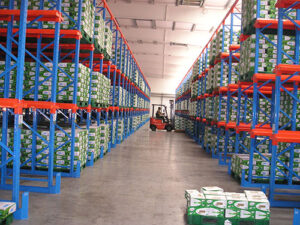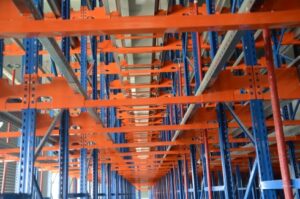
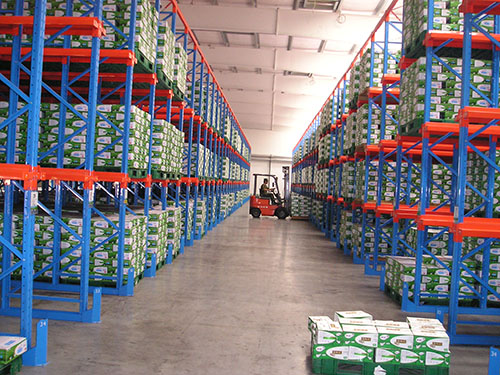
Drive-in racking is a popular choice for warehouses that need to increase pallet storage density while making better use of available floor space. Its deep-lane design reduces the need for multiple access aisles, making it suitable for storing large quantities of similar palletized products.
This type of racking is commonly used in food, cold storage, chemical, manufacturing, and finished-goods warehouses. However, choosing a drive-in racking system isn’t enough. The rack needs to match the warehouse, pallets, forklifts, storage requirements, and operating conditions.
Based on practical experience with warehouse storage projects, we have summarized seven common mistakes to avoid when buying drive-in racking.
Mistake 1: Choosing the Lowest Price Without Checking Structural Requirements
Price matters when purchasing drive-in racking, but choosing the lowest quote can create problems later.
Some low-cost systems may use lighter material or simplified structural components to reduce the initial price. However, drive-in racking is a heavy-duty storage structure that must withstand repeated forklift operations and pallet loads.
The system consists of interconnected components. A problem with one part can affect the performance of the overall structure. Poor material selection, inadequate connections, or insufficient structural capacity may lead to issues such as rack deformation, track damage, or connection failure.
When comparing quotations, buyers should look beyond the final price. Check the steel specifications, component dimensions, load capacity, structural design, surface treatment, and applicable standards.
A lower purchase price does not always mean a lower overall cost. Correct specifications at the beginning can help avoid expensive repairs, replacement parts, or later modifications.
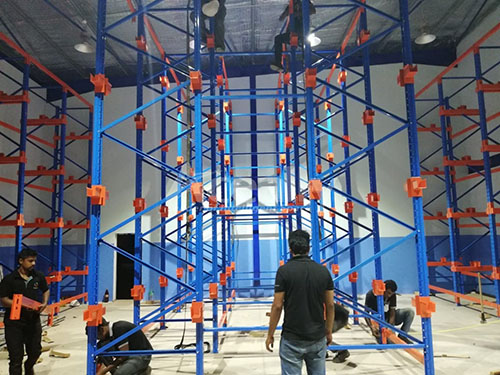
Mistake 2: Applying a Generic Solution Without an On-Site Survey
Drive-in racking is highly dependent on the actual warehouse conditions. Using a standard layout based only on approximate building dimensions can result in wasted space or operational problems.
Before designing the system, the site should be checked carefully. Important factors include:
- Warehouse length, width, and clear height
- Floor flatness and load-bearing capacity
- Building columns and other obstructions
- Doors, loading areas, and emergency exits
- Fire protection requirements
- Available forklift operating space
The storage strategy also needs to be considered. For example, the required loading and unloading method may affect whether a single-entry or double-entry configuration is appropriate. FIFO or LIFO requirements should also be confirmed before the layout is finalized.
A proper site survey gives the design team the information needed to create a practical rack layout. It also reduces the risk of discovering major problems after installation.
Mistake 3: Ignoring Floor Flatness
Floor conditions are easy to overlook during the purchasing process. However, they can directly affect the operation of a drive-in racking system.
Forklifts need to travel into the rack lanes when loading or retrieving pallets. If the floor is uneven, the forklift may become less stable during operation. Pallets can also be more difficult to position correctly.
Repeated forklift movement over an unsuitable floor may increase the risk of contact with rack components. Over time, minor impacts can cause damage to rails, uprights, or other structural parts.
The rack installation itself also requires accurate alignment. Uprights and rails should be installed according to the approved layout. If the rack structure is not properly aligned, pallet placement can become more difficult.
Before installation, the floor condition should therefore be checked against the requirements of the proposed racking system.
Mistake 4: Choosing Rack Dimensions Without Checking Pallet Specifications
A common purchasing mistake is to decide the rack depth or beam height before confirming the actual pallet specifications.
The design should start with the goods being stored. Buyers need to provide accurate information about pallet dimensions, load weight, and load height.
Important data includes:
- Pallet length and width
- Overall load height
- Weight per pallet
- Pallet type and condition
- Required storage depth
- Required vertical clearance
- Number of pallets stored per SKU
Incorrect dimensions can reduce the effectiveness of a high-density storage system. Excessive vertical clearance wastes available warehouse height. Insufficient clearance can make pallet handling difficult.
Rack depth also needs to match the pallet and load configuration. If the depth is too small, the storage position may not be used properly. If it is unnecessarily large, valuable space can be wasted.
The number of pallets stored per SKU is another important consideration. Drive-in racking is generally more suitable for warehouses that store large quantities of the same or similar products. A warehouse with a high number of SKUs but only one or two pallets per SKU may need a different storage strategy.
The goal is not simply to create more rack positions. The system should allow the available space to be used effectively.
Mistake 5: Neglecting Forklift Compatibility
Forklift compatibility should be considered before the racking system is designed.
Unlike conventional pallet racking, drive-in racking requires the forklift to enter the storage lane. The available operating space therefore needs to match the actual forklift being used in the warehouse.
The design should take into account:
- Forklift width
- Turning radius
- Mast configuration
- Maximum lifting height
- Fork length
- Operator visibility
- Required operating clearance
If the rack layout is designed without considering these factors, operators may have difficulty entering the storage lanes. Pallet positioning can also become slower and more difficult.
A layout that looks efficient on paper may not work well with the existing handling equipment. Matching the rack design to the forklift helps maintain smooth daily operation while still achieving high storage density.
Mistake 6: Ignoring Impact Protection and Corrosion Resistance
Many buyers focus heavily on the main rack structure while paying less attention to protective components.
The lower sections of drive-in racking are particularly exposed to forklift contact. Depending on the warehouse operation, suitable protection may include upright protectors, guardrails, reinforced track areas, or other impact-resistant components.
Without appropriate protection, repeated forklift contact can gradually damage rack components. Even minor impacts can become a maintenance issue when they occur frequently.
The warehouse environment also affects the required surface treatment. Cold storage facilities, humid warehouses, and certain industrial environments may require greater attention to corrosion resistance.
Before purchasing, buyers should consider:
- Surface treatment requirements
- Corrosion protection
- Upright protection
- Guardrails
- Track reinforcement
- Warehouse temperature and humidity
Spending less on protective details may reduce the initial quotation, but it can increase maintenance costs over the service life of the system.
Mistake 7: Focusing Only on Hardware While Ignoring Installation Quality
Buying good-quality components is only part of the process. Installation accuracy also has a direct effect on the performance of drive-in racking.
The system contains multiple interconnected components. Uprights, rails, beams, bracing, and connections must be installed according to the approved design.
Poor installation can result in misaligned components, loose connections, uneven rails, or incorrect rack positioning. These issues may affect pallet handling from the beginning of warehouse operation.
After-sales support should also be considered before placing an order. Buyers should clarify installation responsibilities, warranty conditions, replacement parts, technical documentation, and acceptance requirements in the contract.
Do not rely only on verbal promises. Clear documentation gives both the supplier and buyer a defined reference if structural issues or component problems occur after installation.
Conclusion: Good Planning Reduces Long-Term Costs
Buying drive-in racking is not simply a matter of comparing quotations. The system needs to match the warehouse layout, pallet specifications, forklift, storage strategy, and operating environment.
A proper site survey, accurate load information, suitable rack design, correct installation, and appropriate protection can help reduce avoidable problems throughout the service life of the system.
For warehouses looking to increase pallet storage density, the right drive-in racking solution should be designed around the actual operation rather than based on a standard template.
Aceally provides drive-in pallet racking solutions for different warehouse layouts, pallet specifications, and storage requirements. Our design team can support project layouts and customized racking configurations based on actual warehouse conditions.