In modern warehousing, space is one of the most valuable assets. As inventory volumes grow and operations become more complex, businesses need smarter ways to expand without relocating or rebuilding. One of the most effective solutions is the warehouse mezzanine floor.
This guide explains what a mezzanine floor is, how it works, its benefits, safety standards, and how it compares with other storage solutions.
What Is a Mezzanine Floor in a Warehouse?
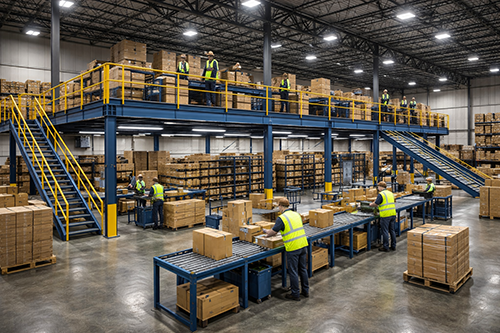
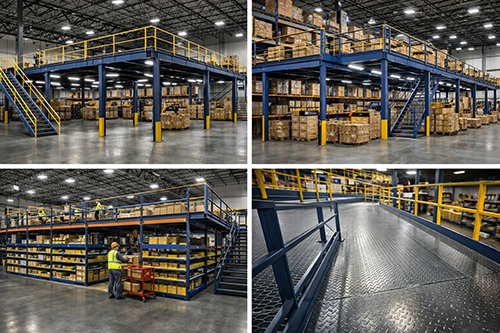
A mezzanine floor is an intermediate level installed between the main floor and the ceiling of a warehouse. Unlike permanent building floors, mezzanines are usually semi-structural and can be installed, modified, or removed without changing the original building structure.
Steel columns or racking systems typically support warehouse mezzanine floors and include components such as decking, staircases, handrails, and safety gates. They are designed to maximize vertical space while maintaining safe and efficient operations.
Main Types of Warehouse Mezzanine Floors
Different mezzanine structures are used depending on storage needs, load requirements, and available space.
Structural Steel Mezzanine
A heavy-duty system supported by steel columns. Suitable for high load capacities and large floor areas.
Rack-Supported Mezzanine
Built directly on pallet racking, using the racking structure as the support frame. Ideal for combining storage and working platforms.
Shelving-Supported Mezzanine
Uses shelving systems as structural support. Common in light-duty storage and picking operations.
Free-Standing Mezzanine
Independent structure that does not rely on existing racks or walls.
Multi-Tier Mezzanine Systems
Two or more mezzanine levels stacked vertically to maximize space utilization.
Common Materials Used
Most warehouse mezzanine floors are made from durable industrial materials:
-
Steel – High strength and long service life
-
Aluminum – Lightweight, corrosion-resistant
-
Wood or Composite Decking – Cost-effective, suitable for light loads
-
Steel Grating – Allows airflow and light penetration
-
Solid Deck Panels – Better for small items and office use
Fire-resistant coatings and anti-slip surfaces are often added for safety.
Key Applications in Warehouses
Mezzanine floors are used in many operational areas, including:
-
Additional storage space
-
Order picking and packing zones
-
Office areas inside warehouses
-
Light manufacturing or assembly
-
E-commerce fulfillment centers
-
Spare parts and accessories storage
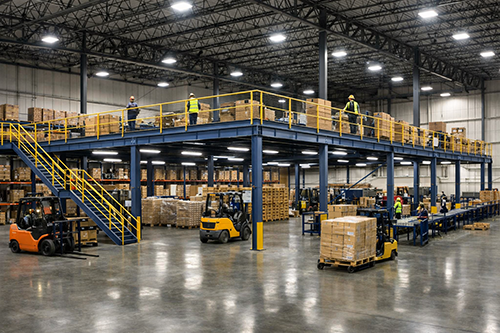
They allow companies to expand vertically without disrupting existing workflows.
Advantages of Installing a Mezzanine Floor
A mezzanine floor offers multiple business benefits:
Maximizes Vertical Space
Uses unused ceiling height efficiently.
Lower Cost Than Building Expansion
No need for new construction or relocation.
Fast Installation
Most systems are prefabricated and assembled on-site.
Flexible and Removable
Can be modified or relocated as business needs change.
Improves Workflow Efficiency
Separates different operational zones for better organization.
Load Capacity & Safety Considerations
Load capacity is one of the most important factors in mezzanine design.
-
Light-duty: 300–500 kg/m²
-
Medium-duty: 500–800 kg/m²
-
Heavy-duty: 1,000 kg/m² and above
Design must account for:
-
Static loads (stored goods)
-
Dynamic loads (people, equipment)
-
Point loads (machinery, conveyors)
Safety features usually include:
-
Guardrails and handrails
-
Industrial staircases
-
Pallet safety gates
-
Toe boards
-
Fire protection systems
Safety Standards & Regulations
Warehouse mezzanine floors must comply with strict safety regulations.
OSHA (U.S.) Requirements
-
Guardrails at least 42 inches high
-
Mid-rails and toe boards
-
Safe stair angles and handrails
IBC (International Building Code)
-
Load capacity certifications
-
Fire exit and egress planning
-
Structural integrity requirements
Fire Safety Rules
-
Emergency exits
-
Fire-resistant materials
-
Sprinkler system clearance
Load Signage
-
Clearly displayed maximum load limits
Local Permits & Inspections
Most installations require engineering approval and safety inspections before use.
Design Factors to Consider
Before installing a mezzanine, several technical factors must be evaluated:
-
Ceiling height and clearances
-
Required load capacity
-
Access methods (stairs, lifts, conveyors)
-
Lighting and ventilation
-
Fire protection systems
-
Future expansion plans
A professional site assessment ensures the mezzanine fits both current and long-term needs.
Installation Process Overview
A typical mezzanine installation includes:
-
Site survey and measurements
-
Structural engineering design
-
Fabrication of steel components
-
On-site assembly
-
Final safety inspection
Most projects can be completed within a few weeks, depending on size and complexity.
Cost Factors of a Warehouse Mezzanine Floor
The total cost depends on:
-
Floor area and height
-
Load capacity requirements
-
Material selection
-
Custom design vs. standard system
-
Installation location and complexity
While mezzanines require upfront investment, they often provide a high return by increasing usable space without expanding the building.
Mezzanine Floor vs. Other Storage Solutions
Mezzanine vs. Pallet Racking
Mezzanines create extra floor space, while racking focuses on vertical storage.
Mezzanine vs. Mobile Racking
Mobile racking saves aisle space; mezzanines add usable levels.
Mezzanine vs. Building Expansion
Mezzanines are faster, cheaper, and more flexible than new construction.
Each solution serves different operational needs, and in many warehouses, they are used together.
Industries That Use Mezzanine Floors
Mezzanine floors are widely used in:
-
Logistics and 3PL warehouses
-
Manufacturing plants
-
Retail distribution centers
-
E-commerce fulfillment
-
Automotive parts storage
-
Pharmaceutical warehouses
-
Cold storage facilities
Their versatility makes them suitable for both light-duty and heavy-duty environments.
Conclusion
A mezzanine floor is a smart, cost-effective way to expand warehouse space without increasing the building footprint. By utilizing vertical space, improving workflow efficiency, and complying with strict safety standards, mezzanines help businesses grow sustainably.
With proper design, installation, and safety compliance, a warehouse mezzanine floor becomes a long-term investment that supports operational efficiency, storage capacity, and future expansion.