When planning a warehouse storage system, many businesses struggle to choose between pallet racking and longspan shelving. These two systems often look similar at first glance because both use upright frames, beams, and multiple storage levels. However, they are designed for different storage requirements. Choosing the wrong system may affect storage efficiency, handling operations, and future warehouse expansion. The main difference is not their appearance, but how they store goods, how products are accessed, and how much load they can support.
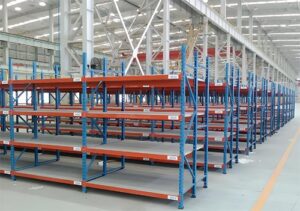
Pallet racking is a heavy-duty storage system mainly designed for palletized goods. It uses upright frames and horizontal beams to create strong storage levels for pallets. With forklifts or pallet handling equipment, warehouses can store large quantities of products vertically while maximizing available space. Due to its high load capacity and excellent storage density, pallet racking is widely used in logistics centers, manufacturing facilities, distribution warehouses, and other industrial applications.
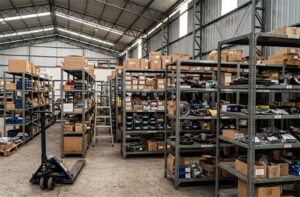
Longspan shelving is a medium-duty storage solution designed for manually loaded products such as cartons, boxes, spare parts, and components. Compared with pallet racking, it focuses more on accessibility and flexibility rather than heavy pallet storage. Its adjustable shelf levels and easy picking access make it ideal for workshops, e-commerce warehouses, retail storage areas, and spare parts rooms.
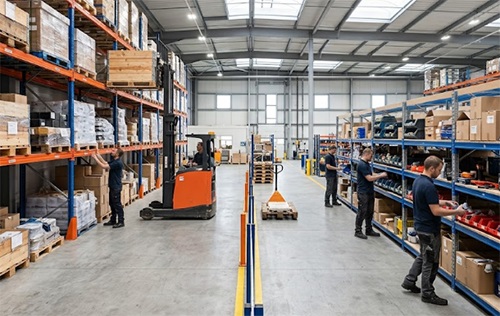
Pallet Racking vs Longspan Shelving: Key Differences
Although pallet racking and longspan shelving share some similar structural features, their designs serve different warehouse operations. The main differences can be seen in storage method, load capacity, handling requirements, and application areas.
| Feature | Pallet Racking | Longspan Shelving |
|---|---|---|
| Main Purpose | Palletized goods storage | Manual picking storage |
| Loading Method | Forklift or pallet truck operation | Manual loading and picking |
| Storage Items | Pallets and bulk products | Cartons, boxes, spare parts, and components |
| Load Capacity | Heavy-duty storage | Medium-duty storage |
| Storage Height | Suitable for high warehouses and vertical storage | Suitable for low to medium height storage areas |
| Accessibility | Requires material handling equipment | Direct access by warehouse workers |
| Best Application | Logistics centers, manufacturing plants, distribution warehouses | Workshops, e-commerce warehouses, spare parts storage |
Quick Selection Guide
- Choose pallet racking if you store palletized goods and use forklifts.
- Choose longspan shelving if you need flexible storage for cartons and small items.
- For large warehouses, combining both systems can improve storage efficiency.
Load Capacity Comparison
One of the biggest differences between pallet racking and longspan shelving is their load-bearing capability. Pallet racking is engineered for heavy-duty warehouse storage, while longspan shelving is designed for medium-duty applications where products are manually loaded and picked.
Pallet Racking: Designed for Heavy Loads
Pallet racking is built to store large quantities of palletized products and withstand frequent loading and unloading operations. Each beam level is designed according to the required load capacity, pallet size, warehouse layout, and handling equipment.
Depending on the system design and specifications, pallet racking can support from hundreds to several thousand kilograms per beam level, making it suitable for demanding industrial environments.
Typical Applications:
- Manufacturing materials and components
- Finished products stored on pallets
- Food and beverage inventory
- Distribution center storage
- Large-scale warehouse operations
Longspan Shelving: Designed for Manual Storage
Longspan shelving is designed for products that are handled manually rather than moved by forklifts. Its wide-span beams and adjustable shelf levels provide a flexible storage solution for cartons, tools, spare parts, and smaller inventory items.
While it does not provide the same heavy load capacity as pallet racking, longspan shelving offers excellent accessibility and organization for warehouses where workers frequently pick individual products.
Typical Applications:
- Automotive spare parts storage
- E-commerce fulfillment areas
- Hardware and tools storage
- Maintenance workshops
- Small-item inventory management
When Should You Choose Pallet Racking?
Pallet racking is the ideal solution when your warehouse handles large volumes of palletized goods and requires efficient storage with forklifts or pallet handling equipment.
Choose Pallet Racking If You Need To:
- Store products on standard pallets
- Use forklifts or pallet trucks for handling
- Maximize vertical warehouse space
- Manage large inventory volumes
- Create a scalable warehouse storage system
Common Applications of Pallet Racking
- Distribution Centers: Pallet racking allows warehouses to store thousands of pallets while maintaining efficient loading and unloading operations.
- Manufacturing Facilities: It provides organized storage for raw materials, semi-finished products, and finished goods.
- Large-Scale Storage Warehouses: It offers the capacity and flexibility required for businesses with high inventory volumes.
When Should You Choose Longspan Shelving?
Longspan shelving is a better choice when products need to be accessed frequently by workers and stored without forklift operations. It provides an organized and flexible storage environment for smaller goods.
Choose Longspan Shelving If You Need To:
- Store cartons, boxes, and individual items
- Perform manual picking operations
- Organize small parts efficiently
- Create flexible storage areas
- Avoid forklift-dependent operations
Common Applications of Longspan Shelving
- Spare Parts Warehouses: Longspan shelving helps workers quickly locate and pick individual components.
- E-commerce Fulfillment Centers: It creates an efficient environment for product storage and order preparation.
- Workshops and Maintenance Areas: It provides convenient access to tools, components, and frequently used materials.
Can Pallet Racking and Longspan Shelving Be Used Together?
Although pallet racking and longspan shelving are often compared as alternative storage solutions, many modern warehouses use both systems together to improve overall efficiency. Instead of choosing only one system, combining different storage solutions allows businesses to optimize both storage capacity and picking convenience.
A common warehouse layout is to use pallet racking for bulk storage areas and longspan shelving for picking areas. Large quantities of inventory can be stored on pallets in pallet racking, while frequently accessed products can be placed on longspan shelving for faster manual picking.
Pallet Racking Area
Used for reserve inventory, bulk products, and palletized goods that require forklift handling.
Longspan Shelving Area
Used for fast-moving items, spare parts, cartons, and products that require frequent manual access.
This combined approach is especially useful for e-commerce warehouses, manufacturing facilities, and distribution centers where both storage density and order fulfillment speed are important.
Cost Comparison: Pallet Racking vs Longspan Shelving
The cost of a warehouse storage system depends on many factors, including storage capacity, material specifications, warehouse layout, installation requirements, and customization. However, pallet racking and longspan shelving have different investment characteristics.
Longspan Shelving
Longspan shelving usually requires a lower initial investment because it uses a simpler structure and does not require forklift access or heavy-duty components.
- Lower installation cost
- Easy adjustment and modification
- Suitable for small and medium storage areas
- Flexible product organization
Pallet Racking
Pallet racking generally requires a higher initial investment because it is designed for heavier loads and professional warehouse operations.
- Higher storage capacity
- Better vertical space utilization
- Suitable for warehouse expansion
- Improved bulk inventory management
Important: The lowest upfront cost does not always mean the most economical solution. A storage system should be selected based on operational requirements, storage volume, and future growth plans.
How to Choose Between Pallet Racking and Longspan Shelving?
Before selecting a warehouse storage system, consider your products, handling methods, available space, and long-term storage requirements.
1. What Type of Products Do You Store?
Products stored on pallets are generally better suited for pallet racking. Cartons, boxes, and individual items are usually better organized with longspan shelving.
2. How Are Products Handled?
Warehouses using forklifts or pallet trucks should consider pallet racking. Warehouses relying on manual picking can benefit from longspan shelving.
3. How Much Storage Capacity Do You Need?
For large inventory volumes and maximum storage density, pallet racking provides better performance. For flexible storage and easy access, longspan shelving is often more suitable.
4. What Is Your Warehouse Layout?
High-ceiling warehouses can maximize space with pallet racking, while smaller storage areas with frequent picking activities may benefit from longspan shelving.
Conclusion
Pallet racking and longspan shelving are both effective warehouse storage solutions, but they are designed for different purposes. Pallet racking is the preferred choice for heavy-duty pallet storage, forklift operations, and large-scale inventory management. Longspan shelving is ideal for manual picking, medium-duty storage, and flexible product organization.
The best storage solution depends on your product type, handling method, warehouse space, and future business needs. In many cases, combining pallet racking and longspan shelving can create a more efficient warehouse by balancing storage capacity with accessibility.
Need Help Choosing the Right Storage System?
Our warehouse storage experts can help you select the right pallet racking or longspan shelving solution based on your products, warehouse layout, and storage requirements.