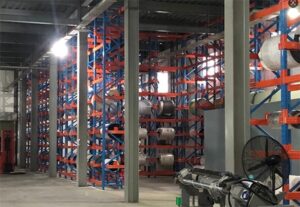
The Safe Working Load (SWL) for pallet racking is not a single fixed value. Different racking systems have different load capacities based on their beam configuration, upright frames, bay dimensions, storage levels, and load requirements. The correct SWL should always be determined from the specific racking system rather than a general industry figure.

Is There a Standard SWL for Pallet Racking?
There is no universal SWL that applies to all pallet racking systems. A rack designed for light pallet loads may have a significantly lower capacity than a heavy-duty system designed for high-density warehouse storage.
When determining capacity, it is important to distinguish between pallet load capacity and racking capacity. The allowable load for a pallet position depends on the rack configuration and how the load is distributed across the beams.
For example, changing the beam length, beam profile, frame height, or number of storage levels can affect the rated capacity. Therefore, two pallet racks with similar appearances may have different SWLs.
How to Find the Correct SWL
The safest way to determine the SWL of pallet racking is to check the information provided for the specific system.
- Check the load capacity plaque: Installed racking should normally display its rated load information where applicable.
- Check the manufacturer’s specifications: Technical data should identify the allowable capacity for the relevant rack configuration.
- Confirm the actual pallet load: The weight, pallet dimensions, and load distribution should match the conditions used for the rack’s capacity rating.
- Ask a qualified professional when in doubt: If the original capacity information is unavailable or the rack has been modified, its capacity should be properly assessed before use.
The SWL should be treated as a rated limit, not a target load. Do not assume that a rack can safely carry more simply because it appears strong enough.
Why Is SWL Important?
Exceeding the rated SWL can increase the risk of beam deformation, upright damage, rack instability, and load collapse. Unevenly distributed loads or damaged components can further reduce the safety margin of a racking system.
Warehouse operators should keep stored loads within the rated capacity and avoid modifying beams, frames, or storage levels without confirming the effect on the system’s capacity.
Conclusion
There is no standard SWL for all pallet racking. The correct capacity depends on the specific rack design, configuration, and loading conditions. When selecting a new pallet racking system, factors such as pallet weight, pallet size, rack dimensions, and required storage levels should be established first so the appropriate capacity can be specified.