Cold storage operators face a different set of challenges from ordinary warehouses. Every square metre inside a freezer room is expensive to build and operate, while low temperatures make daily handling more demanding for both people and equipment.
For businesses storing frozen food, meat, seafood, ice cream, or other temperature-controlled products, the right racking system can make a major difference to storage capacity and operating efficiency.
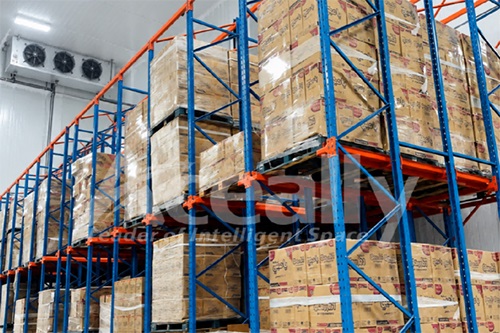
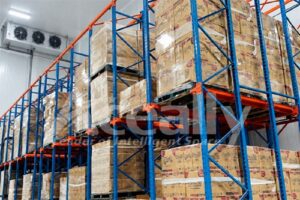
Drive-in racking is often a suitable choice for cold storage warehouses that handle large quantities of similar palletised products. By allowing forklifts to enter deep storage lanes, the system reduces the number of aisles required and increases pallet density within the existing refrigerated space.
However, its suitability depends on product rotation, pallet specifications, forklift operation, and the technical requirements of the low-temperature environment.
How Does Drive-In Racking Increase Cold Storage Capacity?
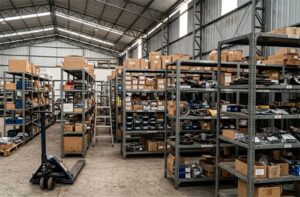
In a conventional selective pallet racking system, each row needs an aisle for forklift access. This provides direct access to individual pallets, but a significant part of the cold room is occupied by working aisles.
Drive-in racking works differently. Pallets are supported on rails inside deep storage lanes, and forklifts enter the lanes to place or retrieve loads.
Because fewer access aisles are needed, more pallet positions can be arranged within the same floor area.
Key benefit: Higher pallet density can improve the use of existing refrigerated space and may reduce the need for additional cold-storage capacity.
For frozen-product distributors, this can be particularly valuable because refrigerated building space is costly to construct and maintain.
The actual increase in pallet capacity depends on the room dimensions, rack layout, pallet size, forklift clearances, and operating requirements.
When Is Drive-In Racking Suitable for Frozen Food Storage?
Drive-in racking is especially suitable for products stored in large batches, such as frozen chicken, seafood, packaged meat, French fries, dairy products, and ice cream.
These goods are often received and shipped in full pallet quantities, making deep-lane storage practical when the number of SKUs is relatively limited.
How Does Stock Rotation Work?
A typical drive-in racking system follows the Last In, First Out (LIFO) principle. The latest pallet placed in a lane is normally the first pallet removed.
This arrangement can work well when products have similar production dates, suitable shelf lives, and a stable stock rotation plan.
However, it may not be the best choice for warehouses that require frequent access to many different SKUs or strict First In, First Out (FIFO) stock rotation.
Before choosing a storage system, buyers should consider not only the required pallet quantity but also how products are received, stored, and dispatched.
Drive-In vs. Other Cold Storage Racking Systems
| Racking System | Main Advantage | Typical Application |
|---|---|---|
| Drive-In Racking | High storage density with fewer aisles | Large batches and limited SKUs; typically LIFO |
| Drive-Through Racking | Access from both ends of the lane | Batch storage with a workflow that can support FIFO |
| Selective Pallet Racking | Direct access to each pallet | Multiple SKUs and frequent pallet access |
The most suitable system depends on inventory turnover, pallet accessibility, forklift operation, and available space.
Cold Storage Project Example: Frozen Chicken and Seafood
In one cold-storage project for a frozen food distributor, the customer needed to store palletised frozen chicken and seafood in separate areas.
The cold room had limited floor space, and the customer wanted to maximise pallet capacity without changing the existing building structure.
After reviewing the pallet dimensions, forklift type, room height, and product turnover requirements, Aceally recommended drive-in racking with separate storage lanes for different product categories.
This layout was intended to keep frozen products organised while reducing the number of forklift access aisles.
One of the customer’s main concerns was whether the racking would be suitable for the low-temperature working environment.
Aceally reviewed the rack design, pallet support rail arrangement, and specified surface treatment before production. Installation drawings and lane identification information were also provided to support the local installation team.
Project takeaway: A cold-storage racking layout should be designed around pallet specifications, product categories, forklift access, and actual inventory flow rather than storage density alone.
What Should Buyers Check Before Ordering Freezer Racking?
A cold-room racking project should not be planned using only standard warehouse information.
Buyers should confirm the operating temperature, pallet dimensions, maximum pallet weight, forklift model, available ceiling height, and required storage density before finalising the rack design.
| Project Factor | What to Check Before Ordering |
|---|---|
| Operating Temperature | Confirm the minimum design temperature and appropriate material, structural, and surface protection requirements. |
| Pallet Information | Provide pallet dimensions, maximum weight, load overhang, and the total number of pallets to be stored. |
| Forklift Operation | Check forklift model, mast height, turning space, and the required clearance inside each storage lane. |
| Product Flow | Confirm whether the stock rotation and SKU mix are suitable for a LIFO storage arrangement. |
| Safety Features | Consider upright protectors, guide rails, lane identification, floor conditions, and safe operating procedures. |
What Makes Racking Design Different in Low-Temperature Warehouses?
Freezer racking must be suitable for the actual working temperature and operating conditions of the cold room.
In addition to corrosion protection and surface treatment, the design should consider the suitability of steel materials and structural connections at the specified minimum temperature.
The required material specifications and structural design should be confirmed according to the project conditions and applicable standards.
Frost, moisture, floor conditions, and forklift clearance inside deep storage lanes also require attention.
Upright protection, guide rails, clear lane identification, and appropriate operating instructions can help reduce the risk of rack damage during daily forklift handling.
Important Design Consideration
Standard warehouse racking should not automatically be assumed suitable for every freezer application. The minimum design temperature, loading conditions, material suitability, and local safety requirements should be reviewed before production and installation.
Is Drive-In Racking the Right Choice for Your Cold Storage Warehouse?
Drive-in racking offers cold-storage operators a practical way to increase pallet density while making better use of existing refrigerated space.
It is particularly suitable for warehouses storing large quantities of similar products in batches, where direct access to every individual pallet is not essential.
However, the final decision should consider inventory rotation, forklift compatibility, pallet loading, low-temperature material requirements, and safe operating clearances.
When the system is designed around actual product flow and warehouse conditions, drive-in racking can provide an efficient long-term storage solution for frozen goods.
Need a Drive-In Racking Solution for Your Cold Room?
Aceally Group supplies customised drive-in racking systems for cold rooms and freezer warehouses.
From layout planning and load capacity confirmation to production and export packing, we help customers develop storage solutions suited to their available space and operating requirements.
Share your cold-room dimensions, operating temperature, pallet specifications, forklift model, and required storage capacity with our team.