Many warehouse owners run into the same frustrating problem: the warehouse looks big, but there is never quite enough usable storage space.
Boxes end up on the floor. Picking takes longer than it should. Some shelves are packed while other levels have large empty gaps. Then peak season arrives, and suddenly the aisles become temporary storage areas.
In many cases, the problem is not a lack of floor space. It is how that space is being used.
Fixed shelves may leave too much unused vertical space. Heavy-duty pallet racking can be more capacity than you actually need. Cheap light-duty shelves may not hold up well when inventory gets heavier.
Medium duty shelving sits between these options and can be a practical choice for warehouses storing cartons, spare parts, components and other medium-weight goods.
Based on the warehouse storage projects we have worked on, here are some common problems to look at and how medium duty shelving can help solve them.
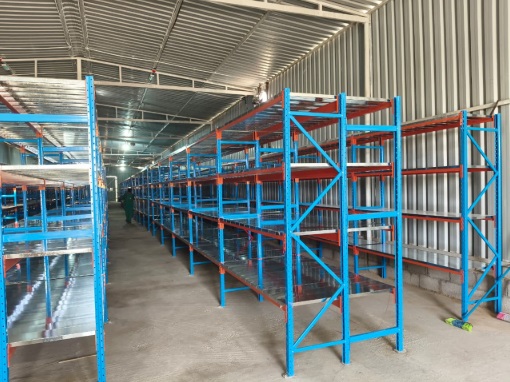
1. Start with the Storage Problems, Not the Shelving
Before changing your shelving, look at what is actually causing the storage problems.
Wasted vertical space
A warehouse can have plenty of unused space above the existing shelves. Fixed shelf heights make this worse because different products rarely have the same dimensions.
Small parts may need only a little vertical clearance, while cartons and larger components need much more.
Instead of giving every product the same amount of space, adjustable shelving allows shelf levels to be arranged around the inventory you actually have.
Inventory keeps changing
Warehouse inventory is rarely static.
A product that takes up two shelf bays today may need five bays during a busy season. New products may also require different shelf spacing from older stock.
This is where fixed storage systems can become inconvenient. You may have enough shelving overall, but not enough usable shelving in the right places.
Paying for capacity you do not need
Choosing storage equipment based only on the highest possible load capacity can increase the cost of a warehouse project unnecessarily.
On the other hand, choosing the cheapest shelving without considering the actual load can create problems later.
The better approach is to match the storage system to the goods, load requirements and handling method.
Poor organization slows down picking
Storage problems are not only about capacity.
When products are randomly stacked, workers spend more time looking for inventory. Frequently picked items may also be stored too far away from the packing or production area.
Good shelving should therefore support the way the warehouse operates, not simply provide more storage levels.
2. Where Medium Duty Shelving Fits
Medium duty shelving is useful for a wide range of manually handled warehouse inventory.
It is generally suited to goods that are too substantial for basic light-duty shelving but do not require pallet racking designed for very heavy loads or forklift handling.
A simple way to look at the difference is:
| Storage Requirement | Typical Storage Choice |
|---|---|
| Small and relatively light items | Light duty shelving |
| Cartons, components, spare parts and general inventory | Medium duty shelving |
| Palletized or very heavy loads | Heavy duty pallet racking |
The exact choice should always be based on the actual load, product dimensions and handling method.
For many small and medium-sized warehouses, medium duty shelving provides a useful balance between storage capacity, flexibility and investment.
3. Make Better Use of Your Warehouse Height
One of the easiest ways to increase storage capacity is to use more of the vertical space you already have.
Instead of putting different products into identical fixed-height sections, arrange shelf levels according to product dimensions.
For example, small components can be stored on closely spaced levels, while larger cartons can have more clearance. If a product line changes, the shelf spacing can be adjusted rather than replacing the entire unit.
This makes the storage area more adaptable and reduces the amount of empty space between products.
For warehouses with manual picking, this can also make inventory easier to see and reach.
4. Organize Shelves Around How Your Warehouse Works
Adding more shelves does not automatically create a better warehouse.
The layout still matters.
Fast-moving products can be positioned in easier-to-reach locations. Frequently picked items can be kept closer to packing, production or dispatch areas. Slow-moving inventory can use higher or less accessible shelf positions.
You can also divide shelving into clear storage zones based on:
- Product type
- SKU
- Product size
- Order frequency
- Production requirements
- Stock turnover
Clear labels and consistent locations make the system easier for workers to use.
This is especially useful in warehouses with many different SKUs, where finding the right product can take more time than physically picking it.
5. Keep Your Storage Flexible as Inventory Changes
A warehouse that works well today may not work as well six months from now.
Seasonal demand, new product lines and changes in order volume can all affect the amount of storage space you need.
Medium duty shelving can make these changes easier to manage because the storage arrangement can be modified without rebuilding the entire warehouse.
During a quieter period, you may need fewer active storage positions. When inventory increases, additional bays can be added or existing space can be reorganized.
For warehouses handling changing product ranges, this flexibility can be more useful than simply installing the highest-capacity storage system available.
6. Choose Capacity Based on the Actual Load
There is a common mistake in warehouse planning: choosing storage equipment based on what it could hold rather than what it actually needs to hold.
If most of your inventory consists of cartons, spare parts, packaging materials or other medium-weight goods, heavy-duty pallet racking may not be necessary for every storage area.
At the same time, light-duty shelving may not provide enough capacity or durability for heavier inventory.
Medium duty shelving can fill this middle ground.
The important point is not that medium duty shelving is suitable for every warehouse. It is that the storage system should match the actual application.
Heavy goods, palletized inventory and forklift operations may require a different solution, while smaller items may be better suited to light-duty shelving.
7. Where Medium Duty Shelving Works in Practice
Medium duty shelving can be used in several types of warehouse environments.
Factory Material Storage
Factories often need storage for spare parts, components, packaging materials and semi-finished goods.
Organizing these materials by SKU or production requirement can make it easier for workers to locate what they need without searching through floor-stacked inventory.
E-commerce and Distribution Warehouses
E-commerce warehouses may handle hundreds or thousands of SKUs, with product sizes and order volumes changing frequently.
Adjustable shelving makes it easier to allocate storage space according to product dimensions and picking frequency. Before major sales periods, the layout can also be reorganized to accommodate higher inventory levels.
Retail and Wholesale Stockrooms
Retail and wholesale operations often need a mixture of products rather than uniform pallet loads.
Shelving can be arranged according to product size, category and sales volume, making back-room inventory easier to replenish and manage.
Spare Parts Storage
Small and medium-sized parts can quickly become difficult to manage when stored in random boxes or floor stacks.
A properly organized shelving system gives each product a defined location and makes inventory easier to identify and retrieve.
8. A Better Warehouse Does Not Always Require a Bigger Warehouse
Improving warehouse storage is not necessarily about adding more equipment.
Start by looking at the space you already have.
Are your shelves using the available height? Are shelf levels suitable for the products stored there? Are fast-moving items easy to reach? Are you using heavy-duty equipment where medium-duty shelving would be sufficient?
These questions can reveal opportunities to improve storage density without expanding the building.
For many warehouses, medium duty shelving is one part of that improvement. Its value comes from combining adjustable storage with a load capacity suitable for everyday warehouse inventory.
Final Takeaway
Good warehouse storage is about matching the storage system to the way your business actually operates.
Use light-duty shelving where the loads are relatively small. Use heavy-duty pallet racking where heavy or palletized goods require it. For cartons, components, spare parts and other medium-weight inventory, medium duty shelving can provide a practical middle ground.
More importantly, adjustable shelving gives you the flexibility to make better use of existing warehouse space as your inventory changes.
The goal is not simply to fit more products into the building. It is to make the space easier to organize, easier to pick from and easier to adapt as your business grows.