When purchasing a radio shuttle system, price is often one of the first things warehouse buyers compare. However, the lowest quotation does not always represent the best long-term value.
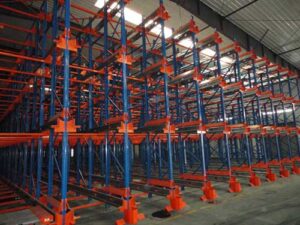
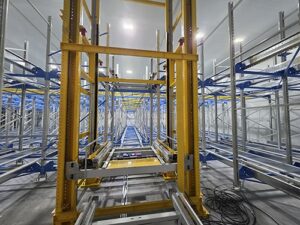
A radio shuttle is more than a battery-powered machine that moves pallets along a storage lane. It operates as part of an integrated system involving pallet racking, running rails, control technology, forklifts, and warehouse operating procedures.
If the shuttle is incompatible with the racking, unsuitable for your pallets, or difficult to maintain, downtime and additional costs can quickly outweigh the initial savings.
Before investing, consider these seven important factors.
Before investing, consider these seven important factors.
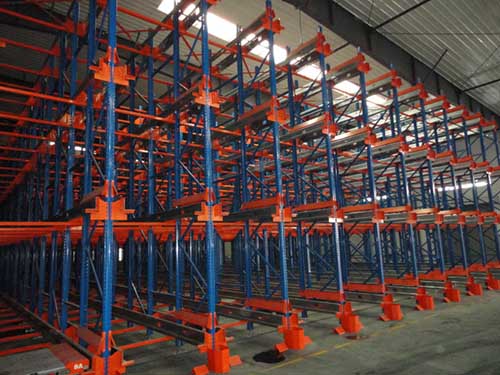
1. Check Racking and Shuttle Compatibility
Compatibility between the radio shuttle and its racking system is one of the most important engineering considerations.
Radio shuttles travel along dedicated rails installed within storage lanes. The shuttle’s dimensions, wheel arrangement, lifting mechanism, and guidance system must match the rail geometry and rack configuration.
Key specifications to verify include:
- Rail dimensions, spacing, and cross-sectional profile
- Rail installation tolerances and alignment
- Shuttle wheel dimensions and positioning
- Rail support brackets and connection details
- Entry guides and end-of-lane safety stops
A shuttle that physically fits between two rails is not necessarily suitable for safe and reliable operation.
Purchasing the shuttle and racking from a single supplier can simplify engineering coordination, installation and after-sales responsibility. However, separately sourced components may also be suitable when both suppliers verify interface specifications and clearly define their responsibilities.
BUYING TIP
Ask your supplier to confirm complete system compatibility before production, particularly when integrating a new shuttle with existing racking.
2. Verify Pallet Specifications and Load Conditions
Not every pallet is suitable for every radio shuttle system, even when its dimensions and weight appear to fall within the advertised limits.
Pallet construction and load distribution can affect lifting, positioning, and transportation inside the storage lane.
Before ordering, confirm:
- Pallet length, width and overall height
- Maximum loaded pallet weight
- Bottom deck and supporting block arrangement
- Pallet deflection under actual loading conditions
- Load distribution and center of gravity
- Any goods extending beyond the pallet edges
For example, a pallet with insufficient bottom support or excessive deflection may interfere with the shuttle’s lifting and movement mechanisms.
Uneven loads and unstable packaging may also affect positioning accuracy and operational safety.
BUYING TIP
Provide actual pallet drawings or photographs, together with the maximum loaded weight and information about the goods being stored. This helps the supplier evaluate pallet compatibility more accurately.
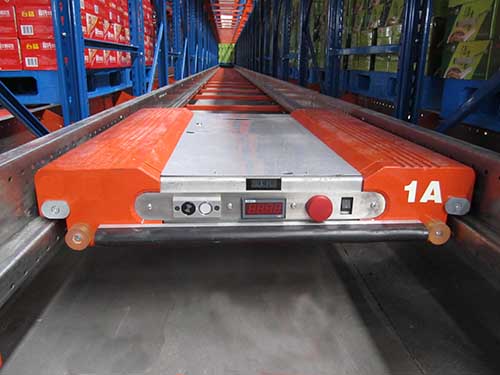
3. Evaluate Battery Performance and Component Reliability
A radio shuttle may complete repeated loading and unloading cycles throughout the working day. Its battery, drive system, and control components therefore play an important role in operating reliability.
Battery System
Check the battery type, rated capacity, charging time, expected operating duration, and replacement requirements.
Actual battery performance depends on pallet weight, travel distance, operating frequency, and warehouse temperature.
Drive and Lifting Mechanisms
Ask about the motors, transmission components, and lifting mechanisms used in the shuttle. These components should be suitable for the expected load conditions and operating frequency.
Sensors and Control System
Review the available positioning, obstacle detection, communication, and fault-detection functions. The exact capabilities depend on the selected shuttle model and control configuration.
Wheels and Mechanical Components
Wheels and other moving parts experience repeated loading and travel cycles. Their design and maintenance requirements should match the intended working environment.
BUYING TIP
Instead of comparing battery capacity or component specifications alone, ask how the complete shuttle performs under operating conditions similar to your warehouse.
4. Match the System to Your Warehouse Layout and Throughput
Radio shuttle systems are commonly used for high-density pallet storage, particularly when warehouses store multiple pallets of the same SKU.
However, maximizing storage density should not be the only objective. The system must also support daily inbound and outbound operations.
FIFO or LIFO?
| Storage Method | Operating Principle |
|---|---|
| LIFO | Last In, First Out. Commonly associated with single-sided lane access, where pallets are loaded and retrieved from the same end. |
| FIFO | First In, First Out. Can be supported by suitable configurations that allow loading from one end and retrieval from the other. |
The actual inventory rotation method depends on the racking layout, access arrangements, and operating procedures.
Before selecting a system, evaluate:
- Number of pallets stored per SKU
- Required pallet storage capacity
- Daily inbound and outbound pallet volumes
- Forklift availability and operating routes
- Number of shuttle units required
- Expected loading and retrieval cycle times
- Available warehouse height and floor space
The required number of shuttles should be evaluated against operating demand, rather than determined by storage capacity alone.
BUYING TIP
Share your warehouse layout and expected daily pallet movements with the supplier. Ask how the proposed configuration will meet your storage and throughput requirements.
5. Review Safety Features and Operating Conditions
Safety is another important consideration when purchasing a radio shuttle system.
The shuttle operates within storage lanes where pallets, steel structures, and moving equipment interact. Suitable safety functions and operating procedures are essential.
Ask the supplier about:
- Obstacle detection and collision prevention functions
- End-of-lane protection and stopping arrangements
- Emergency stop and fault-handling procedures
- Communication loss and low-battery responses
- Operator training and maintenance instructions
- Suitable operating temperature and environmental conditions
Not every shuttle model includes the same safety functions, so the supplier should explain which features are standard and which depend on the selected configuration.
Special environments, such as cold storage facilities, may require additional consideration of batteries, electronic components, and operating conditions.
BUYING TIP
Request the equipment’s safety documentation and operating instructions. Confirm that the proposed system is suitable for your actual warehouse environment.
6. Check After-Sales Support and Spare Parts Availability
A radio shuttle system is a long-term investment. Reliable technical support and maintenance arrangements can be just as important as the equipment’s initial specifications.
Before choosing a supplier, clarify:
- Warranty coverage and exclusions
- Availability of replacement batteries and spare parts
- Technical troubleshooting and remote support options
- Maintenance instructions and operator training
- Installation and commissioning responsibilities
- Procedures for handling equipment faults
For warehouses with demanding operating schedules, delays in obtaining critical replacement components may affect daily material handling operations.
It is important to understand not only what support is offered, but also how that support will be delivered.
BUYING TIP
Ask the supplier to explain its after-sales process and identify commonly required spare parts before placing an order.
7. Compare Total Cost of Ownership, Not Just Purchase Price
Two radio shuttle quotations may look similar at first, but the systems may differ in configuration, included services, and long-term operating requirements.
A meaningful cost comparison should consider more than the price of the shuttle itself.
Potential cost factors include:
- Radio shuttle units and charging equipment
- Racking, running rails and associated components
- Installation and commissioning
- Operator training
- Routine maintenance and spare parts
- Battery replacement over the equipment’s service life
- Expected downtime and operational disruption
For example, a lower-priced quotation may exclude installation services or certain system components included in another offer.
Similarly, differences in battery performance, maintenance requirements and technical support may affect long-term operating costs.
These costs should be evaluated using the proposed configuration and realistic operating assumptions rather than general claims about equipment lifespan.
BUYING TIP
Request a detailed quotation showing what is included, what is optional, and which services or components may involve additional costs.
Before Requesting a Radio Shuttle Quotation
Preparing accurate warehouse information helps suppliers recommend a suitable system and provide more meaningful quotations.
Use the following checklist before contacting a radio shuttle supplier:
| Information Required | What to Provide |
|---|---|
| Warehouse dimensions | Layout drawing, available height, and storage area |
| Pallet specifications | Dimensions, structure, and maximum loaded weight |
| Storage requirements | Total pallet positions and SKU quantities |
| Inventory rotation | FIFO or LIFO requirements |
| Daily operations | Expected inbound and outbound pallet movements |
| Operating environment | Temperature, working hours, and special conditions |
| Existing equipment | Forklift types and any existing racking |
| Project scope | New installation or integration with an existing system |
The more complete your information, the easier it is to evaluate different system proposals on a consistent basis.
Conclusion
Choosing the right radio shuttle system requires more than comparing equipment prices.
Racking compatibility, pallet specifications, component reliability, warehouse throughput, safety, after-sales support, and total cost of ownership all influence long-term performance.
A well-planned system should meet your storage requirements while supporting reliable and efficient daily operations.
Explore Radio Shuttle Racking Solutions
Learn more about Aceally Radio Shuttle Racking System for high-density pallet storage applications.
Planning a Radio Shuttle Racking Project?
Share your warehouse layout, pallet specifications, required storage capacity, and daily operating requirements with Aceally. Our team can help review your project requirements and discuss a suitable radio shuttle racking configuration.