Pallet Radio Shuttle Rack System
Pallet Radio Shuttle Rack System
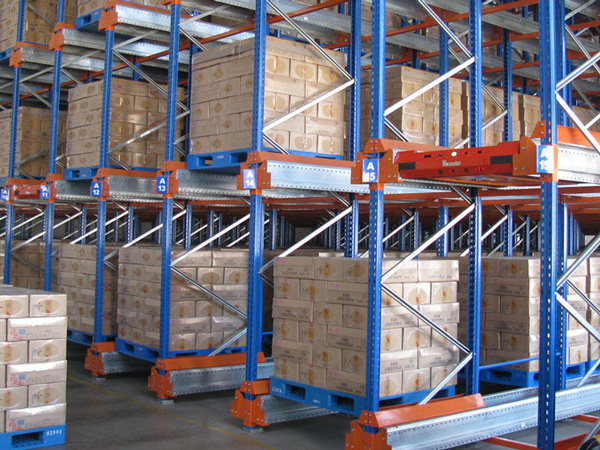
The pallet radio shuttle rack system encompasses a robust supporting rack structure, precision-engineered shuttle rails, and a highly efficient Radio shuttle cart, also referred to as a pallet runner or pallet mole. This advanced system is designed to optimize warehouse storage by streamlining the retrieval and placement of pallets.
The Pallet Radio Shuttle Rack System is a high-density semi-automated pallet storage solution that integrates heavy-duty rack structures, precision shuttle rails, and remotely controlled radio shuttle carts.
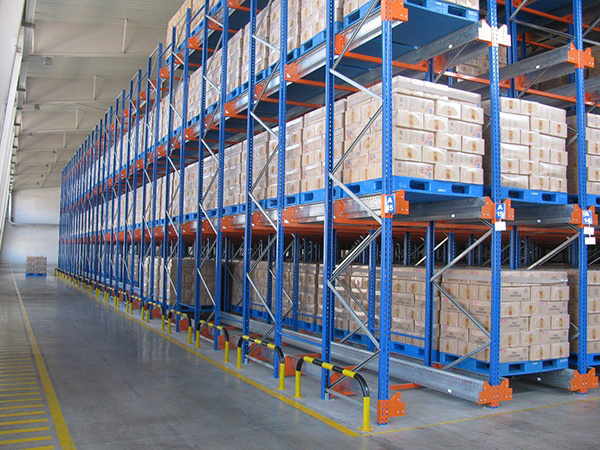
Designed for warehouses requiring efficient space utilization and high-volume pallet handling, this system enables deep-lane storage while reducing forklift movement inside rack channels.
By separating forklift operations from internal pallet transportation, radio shuttle racking improves warehouse safety, increases storage capacity, and enhances operational efficiency. It is widely used in cold storage, food and beverage, manufacturing, logistics, and distribution facilities.
How Does a Radio Shuttle Rack System Work?
The radio shuttle rack system separates forklift handling from deep-lane pallet storage operations. Forklifts operate mainly at the rack entrance, while radio shuttle carts automatically transport pallets inside storage channels.
This operating method reduces forklift travel distance, improves pallet handling efficiency, and minimizes the risk of rack damage caused by frequent forklift access.
Pallet Storage Process
01. Placement
The forklift positions the pallet on the loading rails at the front of the rack lane.
02. Instruction
The operator sends the loading command through a wireless remote controller, tablet interface, or optional warehouse management system (WMS).
03. Transportation
The radio shuttle cart lifts the pallet and transports it accurately to the assigned storage position.
04. Return
The shuttle cart automatically returns to the rack entrance for the next loading cycle.
Pallet Retrieval Process
01. Selection
The operator selects the required pallet location or retrieval sequence.
02. Locate and Lift
The shuttle cart travels along the rails, retrieves the designated pallet, and transports it back toward the rack entrance.
03. Offloading
The forklift removes the pallet from the loading position for dispatch or further processing.
04. Continuous Operation
The shuttle system continues moving pallets according to the selected FIFO or LIFO operating mode.
Key System Components
Heavy-Duty Rack Structural Framework
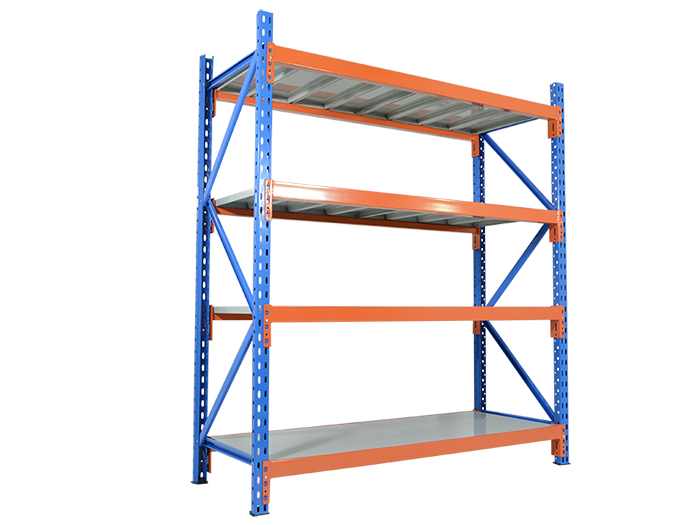
The rack structure provides the foundation for the entire radio shuttle storage system. Manufactured from high-strength steel components, it is engineered to support heavy pallet loads while maintaining long-term structural stability.
The rack configuration can be customized according to:
- Warehouse clear height and layout
- Pallet dimensions and load requirements
- Required storage capacity
- Operational workflow and throughput targets
Precision Shuttle Rails
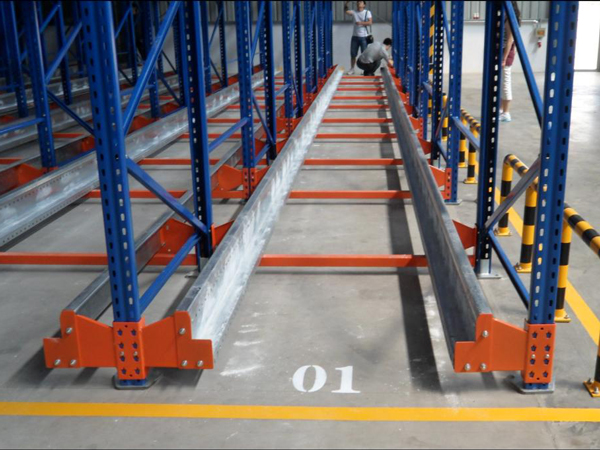
The shuttle rails provide both pallet support and a stable running track for the radio shuttle cart. Manufactured with precision forming processes, the rails ensure smooth shuttle movement and reliable operation during repeated loading cycles.
- Stable shuttle guidance for accurate pallet positioning
- Smooth movement performance up to 1.5 m/s
- Durable surface treatment for long-term operation
- Suitable for standard and cold storage environments
Automated Radio Shuttle Cart
The radio shuttle cart is the core automation component of the system. Equipped with electric drive motors, intelligent control functions, and safety detection features, it performs pallet transportation inside deep storage lanes without requiring forklift entry.
- Reduced forklift movement inside rack channels
- Improved warehouse safety
- Efficient pallet positioning and retrieval
- Support for FIFO and LIFO inventory management
The shuttle cart uses Lithium Iron Phosphate (LiFePO₄) battery technology to provide reliable operation for continuous warehouse applications.
Strategic Advantages of Radio Shuttle Pallet Racking
High-Density Storage Optimization
Radio shuttle pallet racking allows multiple pallets to be stored deep within each lane, significantly increasing storage density compared with conventional selective pallet rack systems.
By reducing the number of operating aisles required and maximizing warehouse volume utilization, the system helps facilities achieve higher storage capacity within the existing building footprint.
Depending on warehouse layout, pallet dimensions, and storage configuration, radio shuttle systems can provide substantial space savings for high-volume storage operations.
Reduced Forklift Operation and Improved Efficiency
Traditional deep-lane storage requires forklifts to enter rack channels for pallet placement and retrieval. This increases operating time and creates potential risks of rack impact.
With a radio shuttle system, forklifts mainly operate at rack entrances while internal pallet transportation is completed automatically by shuttle carts.
Reduced Travel Distance
Less forklift movement inside storage lanes improves workflow efficiency.
Lower Rack Damage Risk
Keeping forklifts outside rack channels reduces collision risks.
Higher Handling Efficiency
Automated pallet movement improves daily warehouse operations.
Improved Warehouse Safety
By reducing forklift movement inside storage lanes, radio shuttle racking helps minimize collision risks and improves overall warehouse safety.
Automated pallet transportation also provides more consistent operation, reducing dependence on manual handling and improving warehouse management efficiency.
FIFO and LIFO Inventory Flexibility
The radio shuttle rack system supports both FIFO and LIFO storage methods to meet different inventory management requirements.
FIFO (First-In, First-Out)
Suitable for products requiring strict stock rotation:
- Food and beverage
- Cold storage
- Pharmaceutical products
- Fast-moving consumer goods
LIFO (Last-In, First-Out)
Suitable for bulk storage applications:
- Raw materials
- Industrial components
- Manufacturing supplies
- Seasonal inventory
Radio Shuttle Rack vs. Drive-In Rack Comparison
Both radio shuttle racks and drive-in racks are high-density pallet storage solutions designed to maximize warehouse space utilization. However, they differ significantly in pallet handling methods, automation level, and operational flexibility.
| Feature | Radio Shuttle Rack System | Traditional Drive-In Rack |
|---|---|---|
| Pallet Movement | Automated radio shuttle cart | Manual forklift operation |
| Forklift Access | Mainly operates at rack entrance | Forklift enters storage lanes |
| Handling Efficiency | Higher efficiency with automated pallet movement | Lower efficiency due to forklift maneuvering |
| Safety Performance | Reduced forklift collision risks | Higher rack impact risk |
| Inventory Management | Supports FIFO and LIFO | Mainly suitable for LIFO |
| Cold Storage Application | Excellent solution for low-temperature environments | More operator exposure in cold areas |
Technical Specifications
The radio shuttle rack system combines a heavy-duty rack structure with automated shuttle technology to provide reliable pallet storage and handling performance. Specifications can be customized according to warehouse conditions, pallet requirements, and operational targets.
Radio Shuttle Cart Technical Parameters
The radio shuttle cart is designed for continuous warehouse operation with durable drive components, intelligent control functions, and advanced safety systems.
| Specification | Engineering Details |
|---|---|
| Rated Payload Capacity | 1,000 kg / 1,500 kg / 2,000 kg (custom configurations available) |
| Operating Speed | Up to 1.5 m/s unloaded / 1.0 m/s loaded |
| Drive System | Dual brushless motor system |
| Battery Technology | Lithium Iron Phosphate (LiFePO₄) battery |
| Battery Operation | Approximately 8–12 hours continuous operation depending on workload |
| Working Temperature | Standard: -10°C to +40°C / Cold storage version: -30°C to +40°C |
| Control Method | Wireless RF remote controller, industrial tablet, optional WMS integration |
| Safety Functions | Obstacle detection, emergency stop, fault diagnosis, anti-collision protection |
Rack Structural Specifications
The rack structure can be engineered according to warehouse dimensions, pallet specifications, storage depth, and required load capacity.
| Structural Parameter | Standard Capabilities |
|---|---|
| Storage Channel Depth | Multiple pallets deep, customized according to project requirements |
| Maximum Storage Depth | Up to 40+ pallets per lane depending on system design |
| System Height | Customized according to warehouse clear height |
| Pallet Compatibility | Euro pallets (800 × 1200 mm), GMA pallets (40 × 48 in), industrial pallets, customized skids |
| Surface Treatment | Electrostatic powder coating or galvanized finish for demanding environments |
Target Applications and Industry Solutions
The flexibility of radio shuttle automation makes it suitable for industries requiring high storage density, reliable pallet handling, and efficient warehouse management.
Cold Storage and Freezer Warehouses
Radio shuttle racking helps maximize storage capacity in refrigerated facilities while reducing forklift movement in low-temperature environments.
Cold-storage-compatible shuttle solutions improve space utilization and operational efficiency for frozen and chilled products.
Food and Beverage Logistics
With FIFO capability, the system supports batch rotation, expiration control, and high-volume pallet storage for food and beverage distribution.
Manufacturing and Raw Material Storage
The system helps manufacturers store raw materials, components, and finished goods while reducing forklift congestion around production areas.
Third-Party Logistics (3PL)
Radio shuttle racking provides flexible FIFO/LIFO operation for 3PL warehouses handling different customer inventories and seasonal storage demands.
Why Choose Our Radio Shuttle Racking System?
A successful radio shuttle project requires more than standard rack components. It requires professional engineering, accurate system design, and reliable manufacturing quality.
Customized Engineering Solutions
Every warehouse has different requirements. Our engineering team provides customized radio shuttle rack solutions based on:
- Warehouse layout and available storage space
- Pallet dimensions and load requirements
- Storage capacity targets
- Forklift operating conditions
- FIFO or LIFO inventory requirements
Through professional warehouse planning and layout optimization, the system is designed to maximize storage efficiency while meeting operational requirements.
High-Precision Manufacturing
The radio shuttle rack system is manufactured using high-quality steel materials and precision production processes to ensure structural stability and accurate shuttle operation.
- Advanced production equipment
- Strict dimensional control
- Reliable welding and forming processes
- Consistent component quality
International Quality Standards
Our radio shuttle rack solutions are designed according to international quality and safety requirements to provide reliable performance for global warehouse applications.
ISO 9001
Quality Management System
CE
Safety Compliance
FEM
Racking Standards
RMI
Structural Guidelines
Complete Project Support
From warehouse planning to final implementation, we provide comprehensive support throughout the project lifecycle.
- Warehouse layout optimization
- Storage solution design
- Technical consultation
- Manufacturing and quality inspection
- Shipping coordination
- Installation guidance
Frequently Asked Questions
How do you retrieve a radio shuttle cart if the battery runs out or a fault occurs inside a deep lane?
The radio shuttle system includes safety and recovery solutions to minimize operational interruptions. In case of a power issue or system fault, operators can use a backup shuttle cart or mechanical retrieval method to safely return the shuttle cart to the rack entrance without entering the storage structure.
How long does the shuttle battery last on a single charge?
The Lithium Iron Phosphate (LiFePO₄) battery provides approximately 8–12 hours of continuous operation depending on workload, travel distance, and operating conditions.
Quick-change battery options can be provided for multi-shift warehouse operations to reduce downtime.
Can the radio shuttle system integrate with a Warehouse Management System (WMS)?
Yes. The system can operate through wireless remote controllers or industrial tablets, with optional WMS integration available for advanced warehouse automation.
WMS integration can support inventory coordination, pallet sequencing, and improved storage accuracy.
What pallet types are suitable for radio shuttle racking?
The system supports various pallet types, including Euro pallets, GMA pallets, plastic pallets, metal pallets, and customized industrial skids.
Pallet dimensions, bottom support structure, and load conditions should meet system requirements to ensure stable shuttle operation.
What is the main difference between Radio Shuttle Rack and Drive-In Rack?
Radio shuttle racks use automated shuttle carts to transport pallets inside storage lanes, while drive-in racks require forklifts to enter the rack structure.
Compared with drive-in systems, radio shuttle racking provides reduced forklift movement, lower collision risks, higher operational efficiency, and support for both FIFO and LIFO inventory management.
Ready to Maximize Your Warehouse Storage Capacity?
Optimize your warehouse space with a customized Pallet Radio Shuttle Rack System designed around your pallet specifications, storage requirements, and operational goals.
Our engineering team can provide warehouse layout analysis, storage optimization suggestions, and a customized quotation based on your project requirements.