Moving plastic crates between storage racks, packing stations, and production areas is a routine task in many warehouses. When containers need to be moved frequently, carrying them by hand can take extra time and effort.
A plastic dolly offers a simple alternative. With a wheeled base that supports a crate or container, workers can move goods across the floor without lifting the entire load for every trip.
However, not all plastic dollies have the same platform design. Choosing the right model depends on the type of crate, its weight, and where the dolly will be used.
1. What Is a Plastic Dolly?
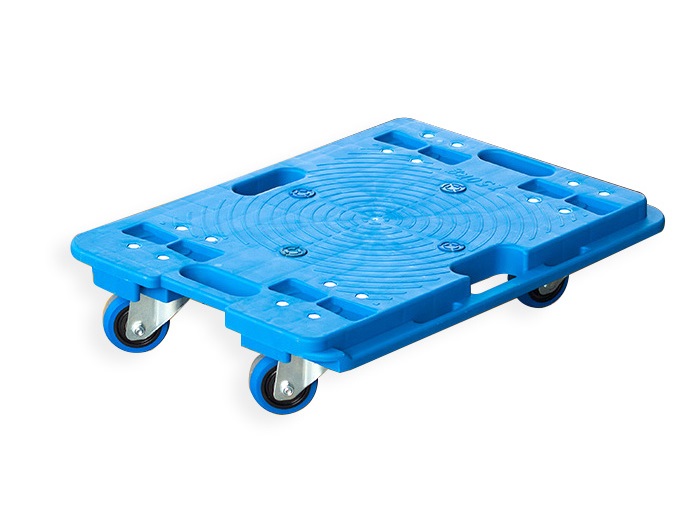
A plastic dolly is a low-profile platform fitted with wheels, commonly used to transport plastic crates, storage containers, and other suitable loads over short distances.
Unlike a conventional platform trolley, most crate dollies do not have a handle. The container sits directly on the wheeled base, allowing the two to move together.
Plastic crate dollies are commonly found in warehouses, distribution centers, factories, and retail stockrooms. They are particularly useful where workers need to move containers between nearby work areas throughout the day.
Different designs are available to suit various crate bases, including solid platforms and open-frame structures.
2. How Does a Plastic Dolly Work Without a Handle?
One of the first things buyers notice about a plastic container dolly is the absence of a handle. This is intentional.
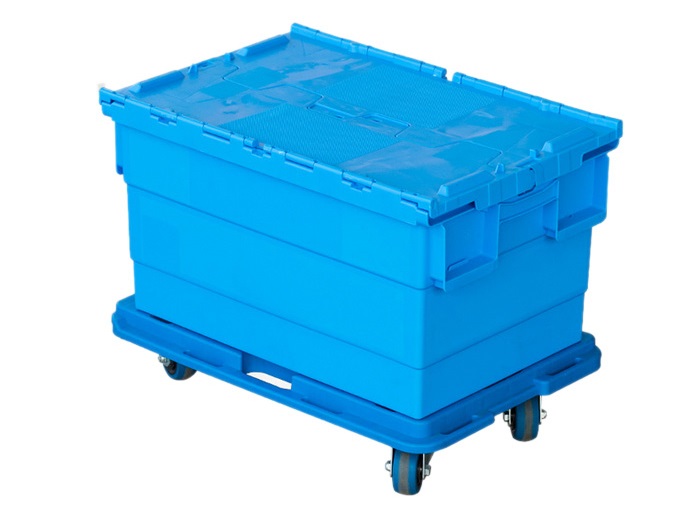
The dolly is designed to sit beneath a compatible crate rather than operate as a separate pushcart.
Place the Crate
Place a compatible crate on the platform. Check that its base is properly supported and sits securely without rocking.
Push the Load
Once the load is stable, gently push the container. The wheels allow the crate and dolly to move together across a smooth, level floor.
Move into Position
Move the crate to a packing table, storage location, or nearby production workstation.
Handling note: Avoid pushing unstable stacks or moving loads beyond the dolly’s rated capacity. The crate must remain securely positioned throughout transport.
3. Types of Plastic Dollies for Warehouse Crates
Plastic dollies are available in several platform designs. Understanding their differences helps buyers select a suitable base for their containers.
Solid Deck Plastic Dolly
A solid-deck dolly has a continuous platform surface, providing a broad supporting area beneath the container.
It may suit crates or loads that require support across more of their base. Container fit and stability must still be checked.
Open Frame Plastic Dolly
An open-frame dolly uses a rectangular supporting frame with an open center.
The crate’s bottom edges or supporting sections must rest securely on the frame. Not every crate base is compatible.
Cross-Braced Plastic Dolly
A cross-braced dolly has additional support members extending across the open frame.
These create additional contact points for compatible containers. Load capacity must be confirmed for the specific model.
4. Key Factors When Choosing a Plastic Dolly
Before ordering a plastic dolly for warehouse use, consider the following points.
Crate Dimensions and Base Design
Start with the crate itself. Measure its bottom dimensions and examine the supporting contact points. The dolly must fit the container properly and keep it stable during movement, particularly with open-frame designs.
Load Capacity
Consider the combined weight of the crate and its contents. Similar-looking dollies may have different load ratings. Confirm the rated capacity of the specific model before ordering.
Wheel Configuration
Check the wheel arrangement, wheel material, and suitability for the floor. Maneuverability matters when dollies are used frequently around workstations or in narrow aisles.
Floor Conditions
Plastic dollies are generally used on smooth, level indoor floors. Uneven surfaces, gaps, debris, and floor transitions can affect movement and load stability.
Frequency of Use
Consider how often the crates are moved and the distances involved. Choose a dolly based on container compatibility and actual working conditions rather than appearance alone.
5. Common Applications in Warehouses and Factories
Plastic crate dollies are used in areas where goods are handled and transported in containers.
Warehouses
Moving crates between storage locations, picking areas, and packing stations.
Manufacturing Facilities
Transporting containers of components or supplies between nearby workstations.
Distribution Centers
Moving goods through sorting, packing, and order preparation areas.
Retail Stockrooms
Repositioning stock containers during receiving, sorting, and replenishment.
In each application, the main purpose is the same: allowing compatible containers to be moved without carrying them over the full distance.
6. Choosing a Plastic Dolly Supplier
When comparing suppliers, ask for more than a product photograph.
A useful quotation should identify the model, overall dimensions, rated load capacity, wheel specifications, and available platform designs.
If you already use a particular plastic crate, provide its bottom dimensions or a photograph of its base. This can help the supplier check whether the dolly is suitable.
For larger orders, it is also worth confirming product availability, packing details, and delivery arrangements.
Conclusion
The right plastic dolly should match the crate, support the intended load, and work reliably on the warehouse floor.
Start by checking container compatibility, then compare platform designs, load ratings, and wheel configurations.
Explore Aceally Plastic Platform Dollies
Aceally offers several plastic dolly designs for warehouse crate handling. Explore the available models or contact our team to discuss compatibility with your containers.