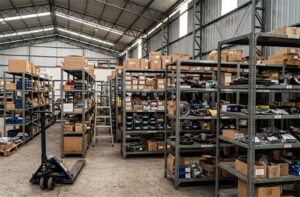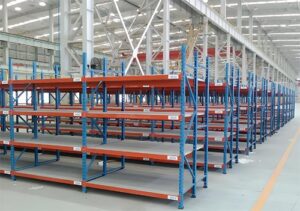
In modern warehouses, pallet racking systems are expected to do much more than simply hold goods.
They must support heavy loads, withstand daily forklift operations, and maintain structural stability
for many years.
A small mistake in rack design or installation can lead to damaged products, operational delays,
or even serious safety risks.
For warehouses operating in Europe and other highly regulated markets,
FEM guidelines for pallet racking systems
are often referenced during the design, manufacturing, and evaluation process.
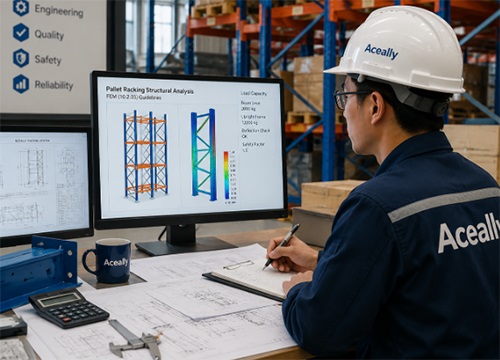
1. What Is FEM and Why Is It Important for Pallet Racking?
FEM stands for European Materials Handling Federation
(Fédération Européenne de la Manutention). It is an organization representing manufacturers
and experts in the materials handling industry, including warehouse equipment, lifting systems,
and storage solutions.
For pallet racking, FEM provides technical recommendations that help manufacturers and engineers
design safer and more reliable storage systems.
Key Areas Covered by FEM Guidelines
- Structural strength evaluation
- Load-bearing capacity calculation
- Rack stability requirements
- Safety factors consideration
- Long-term operational reliability
Unlike simple product specifications that only describe dimensions or load ratings,
FEM guidelines focus on how a racking structure behaves under real working conditions.
A pallet rack in operation is affected by many factors, including:
Weight from stored pallets and inventory.
Impact and movement during warehouse operations.
Daily usage, installation accuracy, and environment.
This is why FEM guidelines are important. They provide a professional reference for evaluating
the safety and performance of pallet racking systems.
2. Understanding FEM 10.2.03 for Pallet Racking Systems
One of the most commonly referenced FEM documents related to pallet racking is
FEM 10.2.03 – The Design of Static Steel Pallet Racking Systems.
FEM 10.2.03 Focuses On:
- Structural design of steel pallet racking
- Load performance evaluation
- Rack stability analysis
- Safe operating conditions
A pallet rack is not simply a combination of upright frames and beams.
It is an integrated structure where every component affects overall performance.
Main Components Considered in FEM-Based Design
| Component | Function |
|---|---|
| Upright Frames | Provide vertical support and transfer loads to the floor. |
| Beams | Support pallets and distribute storage loads. |
| Beam Connectors | Transfer forces between beams and upright frames. |
| Bracing System | Improve rack stability and resistance against movement. |
2.1 Structural Design Requirements
The main purpose of FEM 10.2.03 is to ensure that pallet racking systems have sufficient strength
and stability during use.
During the design process, engineers consider different forces acting on the rack structure.
Vertical Loads
Vertical loads mainly come from stored pallets. Engineers evaluate:
- Pallet weight
- Number of storage levels
- Beam span length
- Load distribution
A rack designed for multiple pallet positions per level requires different structural calculations
compared with a lighter-duty storage configuration.
Horizontal Forces
Warehouse operations also create horizontal forces caused by:
- Forklift movement
- Accidental contact
- Rack sway
- Daily loading activities
A professional pallet racking system must remain stable under these conditions.
2.2 Load Capacity Calculation Under FEM Guidelines
Many buyers ask suppliers:
“How much weight can this pallet rack hold?”
However, pallet rack capacity is not determined by one single number.
The actual load performance depends on the complete rack configuration and engineering calculation.
Factors Affecting Pallet Rack Load Capacity
Column profile, thickness, and structural strength.
Beam length, section design, and load distribution.
Height, levels, and storage layout.
Forklift type and warehouse environment.
A professional pallet racking manufacturer does not simply increase steel thickness to achieve
higher capacity. Instead, engineers optimize the relationship between material usage, structural
performance, and safety requirements.
Beam Capacity
Beam capacity depends on several engineering factors:
- Beam length
- Cross-section design
- Steel mechanical properties
- Allowable deflection limits
Excessive beam deflection may affect pallet stability and create difficulties during warehouse operations.
Therefore, beam design must balance strength, safety, and practical usability.
Upright Frame Capacity
The upright frame carries the combined loads from multiple storage levels.
Its capacity is influenced by:
- Column profile geometry
- Frame height
- Bracing structure
- Base plate design
- Connection performance
For taller warehouse racks and heavier applications, accurate structural calculations become even more important.
Safety Factors
FEM guidelines consider safety margins to ensure pallet racking systems do not operate at their absolute
maximum theoretical limit.
These safety considerations help protect against:
- Unexpected loading conditions
- Minor operational mistakes
- Material variations
- Long-term usage effects
2.3 Stability and Safety Factors
Load capacity is only one part of pallet rack safety.
A storage system must also remain stable during daily warehouse operations.
In real working environments, pallet racks may experience conditions that cannot always be predicted,
including forklift contact, uneven loading, and warehouse floor variations.
Rack Stability
Ensures the complete structure can resist vertical and horizontal forces during operation.
Safety Margin
Provides additional protection between designed capacity and actual warehouse conditions.
The stability of a pallet racking system depends on the combined performance of:
- Upright frames
- Beam connections
- Bracing systems
- Floor anchoring
- Installation accuracy
3. Key FEM Requirements for Pallet Rack Design
FEM guidelines influence almost every stage of pallet rack design, from component selection to final
installation.
Although different pallet racking systems may look similar externally, engineering details determine
their actual safety performance.
3.1 Upright Frame Design
The upright frame is one of the most important structural components of a pallet racking system.
It supports vertical loads from all storage levels and transfers forces to the warehouse floor.
Important Upright Design Considerations
| Factor | Impact |
|---|---|
| Column Profile | Determines strength and resistance against deformation. |
| Steel Thickness | Affects structural performance and durability. |
| Bracing System | Improves frame stability and reduces movement. |
Column Profile Design
Different warehouse applications require different upright profiles depending on:
- Rack height
- Pallet weight
- Number of storage levels
- Warehouse layout
A heavy-duty warehouse rack requires a different upright design compared with a light-duty storage
application.
Bracing System
Diagonal and horizontal bracing components help maintain frame rigidity and improve resistance
against lateral movement.
A properly designed bracing system is especially important for tall pallet racking installations.
3.2 Beam Design and Connection Safety
Beams support pallet loads and transfer forces to upright frames.
However, beam strength alone does not determine system performance.
The beam-to-upright connection is equally important because it directly affects:
How forces move between structural components.
Overall stability during warehouse operations.
Resistance against accidental movement.
Locking Mechanisms and Safety Features
Most professional pallet racking systems use mechanical locking features to prevent accidental
beam disengagement during warehouse operations.
Although these components are relatively small compared with beams and upright frames, they play an
important role in maintaining the overall integrity of the rack structure.
Common Beam Safety Components
- Safety Pins: Prevent accidental beam release.
- Locking Clips: Secure the connection between beam and upright.
- Connector Design: Ensures reliable load transfer and stability.
When evaluating pallet racking suppliers, buyers should consider not only the appearance of the rack
but also the engineering quality behind every connection point.
3.3 Rack Deformation Limits
A common misunderstanding among buyers is that a rack is safe as long as it does not collapse.
However, structural performance should be evaluated before reaching failure conditions.
FEM guidelines consider acceptable deformation limits to ensure that pallet racking systems remain
functional, stable, and safe during normal operation.
Beam Deflection
Controls bending under pallet loads to maintain pallet stability and safe operation.
Upright Deformation
Considers damage, impact, and long-term stress affecting vertical supports.
Installation Accuracy
Ensures correct alignment, anchoring, and structural performance after installation.
Even a well-designed pallet racking system can experience reduced performance if installation is
incorrect.
Important installation factors include:
- Vertical alignment of upright frames
- Correct floor anchoring
- Proper beam positioning
- Required aisle clearance
4. FEM vs EN 15512: What Is the Difference?
When discussing European pallet racking standards, FEM guidelines and EN standards are often
mentioned together.
Although they are closely related, they serve different purposes. Understanding the difference helps
buyers evaluate supplier qualifications more accurately.
FEM 10.2.03
Provides industry-based design recommendations for static steel pallet racking systems, focusing on
practical engineering solutions and safety considerations.
EN 15512
Defines structural design principles for adjustable steel pallet racking systems, including load
assessment, calculations, and stability requirements.
Key Differences Between FEM and EN Standards
| Standard | Main Focus |
|---|---|
| FEM 10.2.03 | Industry design recommendations and practical engineering guidance. |
| EN 15512 | Structural design principles for adjustable pallet racking systems. |
| EN 15620 | Installation tolerances and operational requirements. |
| EN 15629 | Specification requirements for storage systems. |
How Do FEM and EN Standards Work Together?
In many European warehouse projects, FEM recommendations and EN standards are considered together
during the design and approval process.
For buyers, the important point is not simply whether a supplier mentions compliance.
A professional pallet racking manufacturer should be able to explain:
How load capacities are determined.
How components maintain consistent quality.
How technical documents support installation.
5. How FEM Guidelines Affect Pallet Racking Manufacturing
FEM guidelines influence not only the final rack design but also the complete manufacturing process.
From raw material selection to quality inspection, every production stage can affect the structural
performance of a pallet racking system.
Manufacturing Factors Influenced by FEM Requirements
- Steel material selection
- Component dimensional accuracy
- Roll forming quality
- Connection precision
- Quality inspection procedures
Material Selection and Steel Quality
The performance of a pallet racking system starts with the materials used during manufacturing.
Manufacturers need to consider:
- Steel grade
- Material thickness
- Mechanical strength
- Dimensional consistency
Using suitable materials helps ensure that racks maintain reliable performance under continuous
warehouse operations.
Precision Roll Forming and Component Accuracy
Most modern pallet racking components are manufactured through precision roll forming processes.
During production, dimensional accuracy plays an important role in ensuring proper assembly and
structural performance.
Small differences in component dimensions may affect:
Connection Accuracy
Ensures beams and uprights fit correctly during installation.
Load Distribution
Helps maintain balanced structural performance.
Rack Alignment
Improves stability after installation.
Experienced pallet racking manufacturers invest in accurate production equipment and strict process
control to maintain consistent component quality.
Welding, Surface Treatment, and Corrosion Protection
Although many pallet rack components are produced through roll forming, some parts require additional
fabrication processes such as welding.
Consistent manufacturing quality helps ensure:
- Reliable component strength
- Stable connections
- Long-term durability
Common Surface Protection Methods
| Powder Coating | Suitable for many indoor warehouse applications. |
| Galvanized Finish | Provides additional corrosion resistance for demanding environments. |
Quality Control Before Shipment
Manufacturing compliance does not end after production. Before pallet racking systems are delivered,
professional suppliers perform inspections to verify product quality.
Typical Quality Inspection Items
- Component dimensions
- Surface finish quality
- Welding consistency
- Assembly accuracy
- Packaging protection
- Technical documentation
For international warehouse projects, complete technical information is especially important because
customers and engineers often need documentation before installation.
6. Why Should Buyers Choose FEM-Compliant Pallet Racking?
When purchasing pallet racking systems, price is an important factor. However, the lowest initial
cost does not always represent the best long-term value.
A warehouse storage system is a long-term investment that affects safety, efficiency, and operating
costs.
Improved Safety
Proper engineering helps reduce risks related to overloading, instability, and component failure.
Reliable Performance
Clear capacity calculations help warehouses operate with confidence.
International Project Support
Professional suppliers understand global engineering requirements.
7. How to Check If a Pallet Rack Supplier Follows FEM Guidelines?
When selecting a pallet racking supplier, buyers should look beyond product images and quotation
prices.
A reliable manufacturer should be able to provide technical information explaining how the rack
system is designed and produced.
| Check Point | What Buyers Should Ask |
|---|---|
| Load Data | Can the supplier provide beam and upright capacity information? |
| Engineering Drawings | Are technical drawings available before production? |
| Standards Experience | Does the supplier understand FEM and international requirements? |
| Technical Support | Can the supplier support installation and project requirements? |
8. Common Mistakes When Buying Pallet Racking Without FEM Consideration
Choosing Only Based on Price
Low-cost solutions may reduce initial investment but can create additional risks if they use lower
quality materials, simplified designs, or insufficient engineering support.
Ignoring Warehouse Conditions
A pallet racking system should be designed according to actual operating requirements, including:
- Forklift type
- Pallet dimensions
- Storage height
- Loading conditions
- Warehouse environment
Focusing Only on Maximum Capacity
Higher advertised capacity does not always mean a better solution.
The correct rack design should balance:
- Safety
- Space utilization
- Cost efficiency
- Operational requirements
9. FEM Guidelines Checklist for Pallet Racking Projects
| Item | Check |
|---|---|
| Rack design | Designed according to recognized engineering principles |
| Load calculation | Capacity information clearly provided |
| Technical documents | Drawings and specifications available |
| Supplier capability | Experience with international projects |
Final Thoughts: Building Safer Warehouses with Professional Racking Design
FEM guidelines provide an important reference for designing safer and more reliable pallet racking
systems. They help manufacturers and warehouse operators evaluate structural performance, safety
requirements, and long-term reliability.
For buyers, understanding FEM requirements makes it easier to compare suppliers and choose a storage
solution that meets both current and future warehouse needs.
With years of experience in warehouse storage solutions,
Aceally provides pallet racking systems designed for different industrial applications
and international markets. By combining engineering expertise, advanced manufacturing processes,
and strict quality control, Aceally helps customers build safer, more efficient, and better-organized warehouse environments.