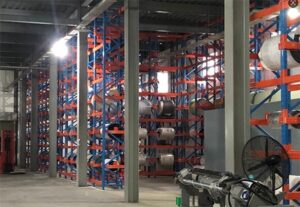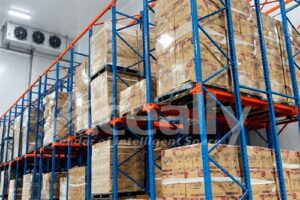
Conventional pallet racking—also known as selective pallet racking—remains the most widely used warehouse storage system in the world. Designed to provide direct access to every pallet, it offers a practical balance of cost, capacity, and flexibility, making it ideal for facilities that handle large SKU varieties and fast-moving inventory. Whether you operate a logistics center, distribution warehouse, retail fulfillment hub, or manufacturing supply area, understanding this racking system is essential for optimizing space and efficiency.

What Is Conventional Pallet Racking?
Conventional pallet racking is a storage system made of upright frames, horizontal beams, safety pins, and optional accessories. Forklifts place pallets on the beams, allowing operators to access each pallet individually. Because every pallet position is reachable without moving others, this system delivers maximum selectivity—an important advantage in warehouses with diverse products.
This racking type supports a broad range of pallet sizes, weights, and load types. It is commonly used in industries such as 3PL logistics, e-commerce, food distribution, automotive components, and general warehousing.
Key Features
Conventional pallet racking is known for its versatility and straightforward design. Its most important features include:
-
Direct access to all pallets without needing to move adjacent loads
-
Adjustable beam levels to fit changing pallet heights
-
Compatibility with standard forklifts, reach trucks, and VNA trucks
-
Modular design, easy to install, expand, or reconfigure
-
Strong steel structure capable of supporting heavy-duty pallet loads
These features make it a reliable, long-term storage solution for warehouses of all sizes.
Benefits of Conventional Pallet Racking
This system remains popular because it provides a strong overall performance across cost, capacity, and operation. Key benefits include:
High selectivity
Operators can pick any pallet at any time, making it well-suited for warehouses with many SKUs and high turnover.
Flexible storage options
Beam levels can be adjusted to accommodate different pallet types, box sizes, or product heights.
Cost-effective setup
Compared with drive-in racks, push-back racks, or shuttle systems, conventional racking requires a smaller investment and minimal maintenance.
Easy expansion
Warehouses can add new bays or rows as demand grows, without disrupting existing operations.
Efficient inventory management
Direct access supports FIFO (First In, First Out) operations, common in food, retail, and fast-moving goods.
Common Layout Options
Although the system is simple, it can be configured in several ways depending on space requirements:
Single-Deep Selective Racking
The most common design. Offers full accessibility and is ideal for mixed SKU storage.
Double-Deep Racking
Two pallets stored deep. Reduces aisle count and increases storage density but requires a deep-reach forklift.
Back-to-Back Rows
Two rows placed back-to-back to create stable central aisles and maximize space.
Narrow Aisle (VNA) Layout
Uses specialized forklifts and narrower aisles to significantly increase pallet positions without changing rack height.
How It Compares to Other Systems
To better understand its advantages, here’s how it differs from other common racking types:
-
Drive-In Racking – Higher density but lower selectivity
-
Push-Back Racking – Better density but costlier and limited to LIFO
-
Radio Shuttle Racking – Very high density and semi-automation, but higher investment
-
Cantilever Racking – Designed for long materials, not pallets
Conventional pallet racking stands out because it balances accessibility and affordability, making it suitable for most general warehousing operations.
Safety Considerations
Safe use of pallet racking is essential for preventing accidents and extending system life. Key practices include:
-
Following load capacity labels
-
Installing upright protectors and guard rails
-
Ensuring proper beam locking
-
Training forklift operators
-
Conducting regular inspections for damaged uprights or beams
Routine maintenance helps reduce downtime and protects both employees and inventory.
How to Choose the Right System
When selecting a racking layout, consider these factors:
-
Warehouse size and ceiling height
-
Pallet dimensions and load weight
-
SKU variety and picking frequency
-
Forklift type
-
Future expansion needs
A well-designed layout improves workflow efficiency and supports long-term growth.
Conclusion
Conventional pallet racking continues to be the backbone of warehouse storage worldwide. Its simple structure, direct pallet access, and cost-friendly design make it the ideal choice for businesses seeking a flexible, scalable, and reliable storage system. Whether you are upgrading an existing warehouse or building a new facility, conventional pallet racking offers a proven solution for improving space utilization and operational efficiency.