High Density Double Deep Pallet Racking Systems
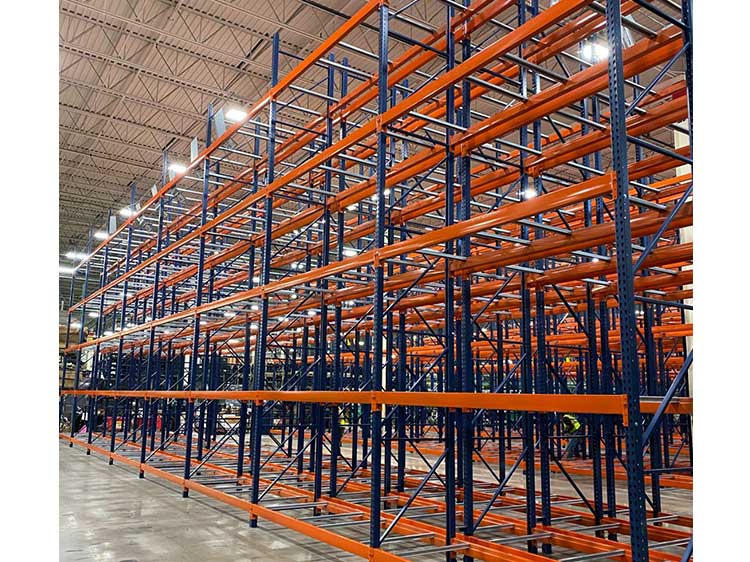
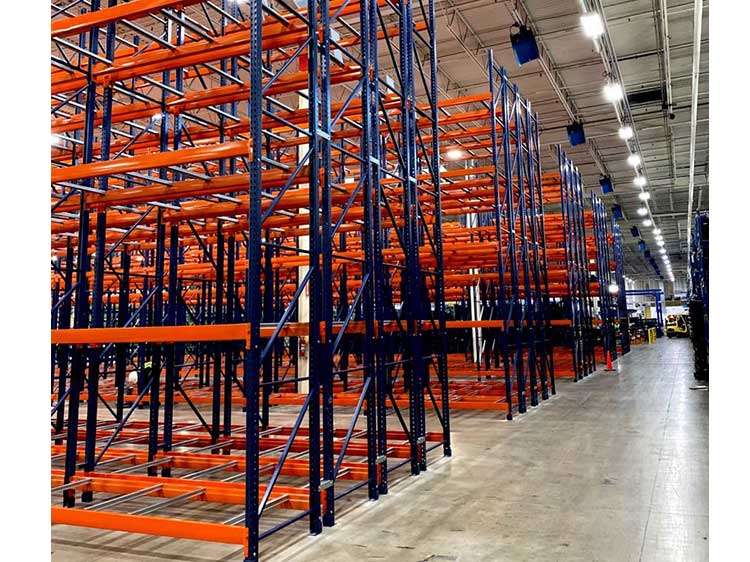
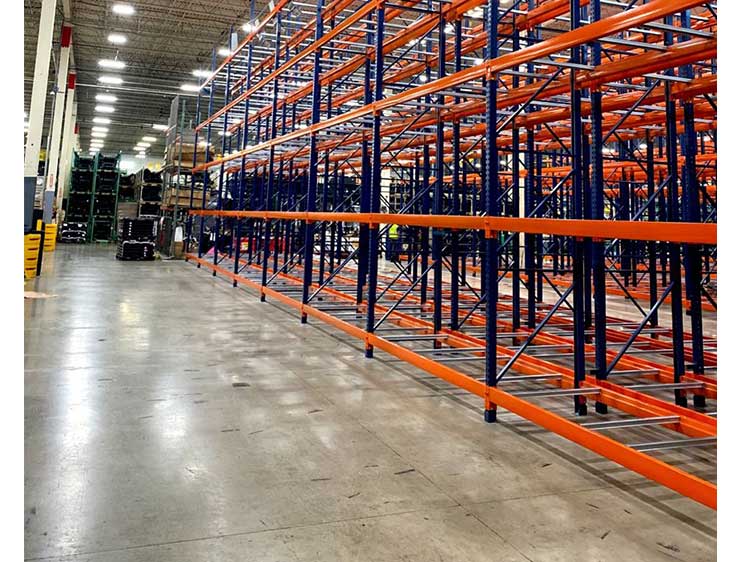
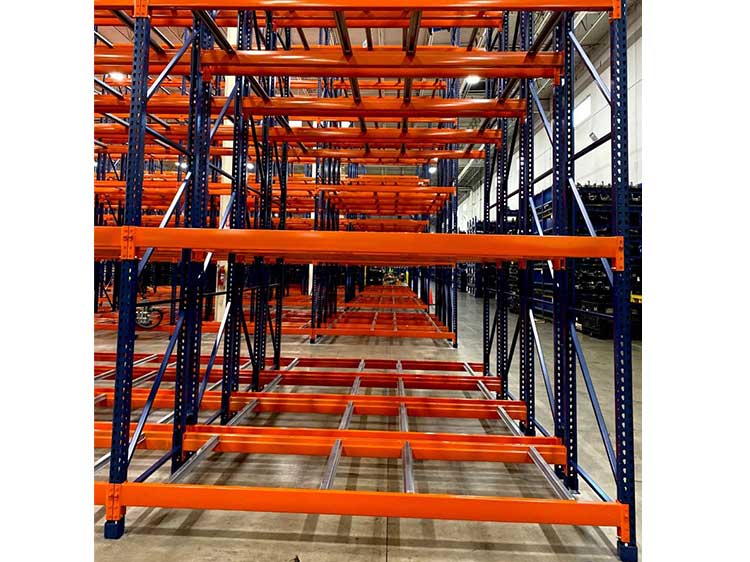
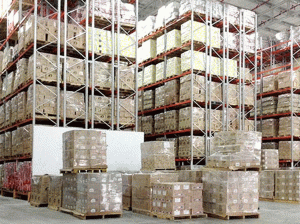
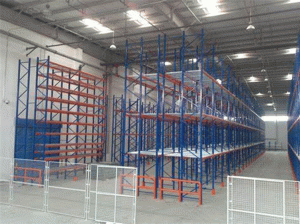
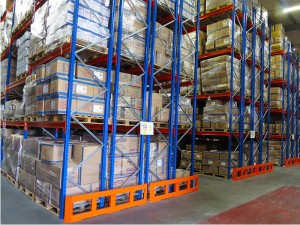
High-density double deep pallet racking is a warehouse storage system designed to increase pallet capacity by storing pallets two positions deep instead of one. Compared to standard selective racking, this configuration allows businesses to optimize available space without expanding the warehouse footprint.
This system operates on a last-in, first-out (LIFO) principle, meaning the front pallet must be removed before accessing the pallet stored behind it. As a result, when storage locations are full, up to 50% of SKUs are not immediately accessible.
In practical warehouse layouts, double deep racking can typically increase storage capacity by 10% to 30%, depending on aisle width, rack configuration, and operational setup.
When Should You Use Double Deep Racking?
From a practical perspective, double deep pallet racking is best suited for operations where storage density is more important than immediate access to every pallet.
It is commonly used in warehouses handling:
- Large quantities of the same SKU
- Medium-turnover inventory
- Products with medium to long shelf life
In real-world applications, industries such as FMCG, manufacturing, and distribution centers often adopt this system to balance cost and storage efficiency.
However, due to its LIFO nature, it is not recommended for perishable goods or operations that require strict FIFO inventory management.
Advantages of Double Deep Pallet Racking
- Higher storage density than selective pallet racking
- Better space utilization without major structural changes
- Cost-effective upgrade compared to fully automated systems
- Suitable for scalable warehouse layouts
- Reduces the number of aisles required
Disadvantages You Should Consider
- Limited accessibility to rear pallets (reduced SKU selectivity)
- Operates on a LIFO inventory system
- Requires specialized forklifts, such as double deep reach trucks
- Slightly increased handling time compared to selective racking
Double Deep vs Selective Pallet Racking
| Feature | Double Deep Racking | Selective Racking |
|---|---|---|
| Storage Density | Higher | Lower |
| Accessibility | Limited (50%) | 100% |
| Inventory Flow | LIFO | FIFO |
| Forklift Requirement | Reach Truck | Standard Forklift |
| Space Utilization | Optimized | Standard |
From an operational standpoint, double deep racking is often chosen when warehouse space is limited and SKU variety is manageable.
Key Design & Operational Considerations
When planning a double deep racking system, several practical factors should be evaluated:
- Forklift type: Double deep reach trucks are required
- Aisle width: Typically ranges from 2.8m to 3.2m
- Pallet uniformity: Best suited for consistent pallet sizes
- Inventory turnover: Works best with medium turnover rates
- Warehouse layout: Should balance density and accessibility
Proper system design is essential to ensure both efficiency and safety in daily operations.
Typical Applications
Double deep pallet racking is widely applied in:
- Warehouses with limited floor space
- Storage of bulk or low-SKU products
- Facilities combining selective and high-density storage systems
- Distribution centers aiming to reduce storage costs per pallet
Expert Insight
In most warehouse projects, double deep racking is not used as a standalone solution but as part of a hybrid storage strategy. It is often combined with selective racking to balance accessibility and density.
For businesses looking to increase storage capacity without investing in automation, double deep racking remains one of the most practical and cost-efficient upgrades.